
FDA has been great at posting investigations. The 2022 E. coli outbreak is over, but not yet identified. At least 10 have been sickened by packaged salads.  The two Listeria outbreaks are interesting due in part to the length of time the same WGS of Listeria was sickening people during both outbreaks.  The Salmonella outbreak linked to 65 illnesses and cut cantaloupe has yet to be identified to a grower, processor or retailer.  The Salmonella onion outbreak has sickened 892, but has not been updated since November 16, 2021.

The U.S. Food and Drug Administration (FDA) has released a report on its investigation of the Salmonella Typhimurium outbreak that caused 31 reported illnesses and four hospitalizations in the U.S. between June and August 2021.

The FDA worked with the U.S. Centers for Disease Control and Prevention (CDC) and state partners to investigate the outbreak, which was linked through epidemiology and traceback to packaged salad greens during the summer of 2021.

This outbreak is believed to be the FDA’s first domestic investigation of a foodborne illness outbreak associated with leafy greens grown in a Controlled Environment Agriculture (CEA) operation. The CEA operation produces leafy greens using common commercial high-density hydroponic growing techniques with deep water culture and floating raft production methods. The report released today includes an overview of the traceback investigation, investigation results, and various factors that potentially contributed to the contamination of packaged leafy greens with Salmonella.

Although a conclusive root cause was not identified, the agency identified certain conditions and practices that could result in contamination, including the presence of a different serotype of Salmonella in pond water used to grow the leafy greens, growth media storage practices, water management practices, and general sanitation practices at the CEA that were inadequate to prevent the introduction or spread of microorganisms of public health significance into the leafy greens.

FDA isolated the outbreak strain of Salmonella Typhimurium in a stormwater retention basin adjacent to the CEA farm. However, the investigation did not reveal if that stormwater retention basin was the source of the Salmonella that ultimately contaminated the leafy greens. This highlights the importance of assessing all microbial hazards, including those associated with adjacent and nearby land uses.

In light of this report, FDA highlights the following requirements and recommendations applicable to firms, such as the hydroponic operation implicated in this S. Typhimurium outbreak, engaged in CEA. Here are some of the requirements and recommendations:

  • Develop a keen understanding of potential sources and routes of contamination including the raw materials and inputs used, as well as possible sources of contamination throughout the operation.
  • Implement effective sanitation procedures and sampling plans while also paying close attention to hygienic operations and equipment design, ensuring cleaning procedures do not contribute to the dispersion of microbial contaminants that may be present.
  • Assess growing operations to ensure implementation of appropriate science- and risk-based preventive measures, including applicable required provisions of the FDA Food Safety Modernization Act (FSMA) Produce Safety Rule and good agricultural practices (GAPs).
  • Implement procedures that are effective in rapidly cooling and cold holding harvested leafy greens after harvest and verify the effectiveness of the cooling and cold holding procedures, including the routine monitoring of processing and storage environments and product temperatures to prevent pathogen growth in harvested leafy greens.
  • If employing tools such as pre-harvest and post-harvest sampling and testing of food, water, and the physical environment, seek to identify and inform sampling plans, limits of detection, and mitigation measures that control potential sources and routes of bacterial contamination in the growing and harvesting environment.
  • Ensure that all growing pond water is safe and of adequate sanitary quality for its intended use, which includes implementing measures (such as water treatment) necessary to reduce the potential for contamination by known or reasonably foreseeable hazards.
  • Perform a root cause analysis when a pathogen is identified in the growing environment, in raw agricultural inputs such as water, or in the agricultural commodity to determine how the contamination likely occurred and implement appropriate prevention and verification measures.
  • Assess and mitigate risks associated with adjacent and nearby land uses that may impact CEA operations, in both rural and more urbanized settings.

As of January 10, 2022, a total of 44 people infected with the outbreak strain of Salmonella Uganda have been reported from 25 states. Illnesses started on dates ranging from December 24, 2020, to December 2, 2021.

Sick people range in age from younger than 1 to 84 years, with a median age of 27, and 8 ill people were children under the age of 5. Of 43 people with sex information, 27 (63%) are female. Of 37 people with information available, 15 (41%) have been hospitalized. No deaths have been reported.

Public health investigators are using the PulseNet system to identify illnesses that may be part of this outbreak. CDC PulseNet manages a national database of DNA fingerprints of bacteria that cause gastrointestinal illnesses. DNA fingerprinting is performed on bacteria using a method called whole genome sequencing (WGS). WGS showed that bacteria from sick people’s samples are closely related genetically. This means that people in this outbreak likely became sick from contact with the same type of animal.

On November 19, 2021, Oregon Health Authority collected samples from a bearded dragon in a sick person’s home for testing. WGS showed that the Salmonella on the animal is closely related to bacteria from sick people. This means that people likely got sick from touching bearded dragons.

My guess is that Famous Anthony’s wishes it would have vaccinated its employees against hepatitis A instead.

Roanoke Times reports that owners of Famous Anthony’s filed bankruptcy Monday at two of their Roanoke locations after a hepatitis A outbreak originating from one of their employees killed four people and hospitalized more than 35 and sickened 52
Attorney Andrew Goldstein said the chapter 11 filing allows the company to reorganize and remain open. In 90 days, the company will submit a plan outlining a payment schedule for the people who have claims against the restaurant.

Seattle food law attorney Bill Marler currently represents more than two dozen people who were sickened from or died in the Famous Anthony’s outbreak last fall.

An employee who worked at three locations — Grandin Road Extension, Williamson Road and Crystal Spring Avenue — tested positive for the virus. Throughout September and October, more than 50 cases were confirmed to be connected to the outbreak. The Crystal Spring location closed and the owners have filed bankruptcy on the remaining two restaurants involved.

Goldstein said the bankruptcy will help preserve jobs for the restaurant’s employees and allow the company to continue conducting business to meet the obligations it has to those affected by the outbreak.

History of Inspectionshttps://pa.healthinspections.us/montgomery/#facility

The USDA has announced the recall of nearly 30,000 pounds of ground beef, including Kroger-branded ground beef sold at Fred Meyer and QFC supermarkets, as well as products sold at Albertsons, Walmart, and WinCo grocery stores.

Interstate Meat Dist. Inc. of Clackamas, OR, initiated the recall of approximately 28,356 pounds of ground beef products because testing showed positive results for contamination with E. coli O157:H7.

The ground beef was shipped to retail locations in Arizona, California, Nevada, Oregon, Utah, Washington and Wyoming.

Stores under the Kroger banner are Kroger, Ralphs, Dillons, Smith’s, King Soopers, Fry’s, QFC, City Market, Owen’s, Jay C, Pay Less, Baker’s, Gerbes, Harris Teeter, Pick ‘n Save, Metro Market, Mariano’s. At this time Fred Meyer stores are the only know Kroger stores to have received the recalled ground beef, according to a Kroger spokeswoman.

There is concern that consumers may have the ground beef in their home freezers. The raw, ground beef was produced on Dec. 20, 2021. These products should be thrown away or returned to the place of purchase, according to the USDA’s Food Safety and Inspection Service.

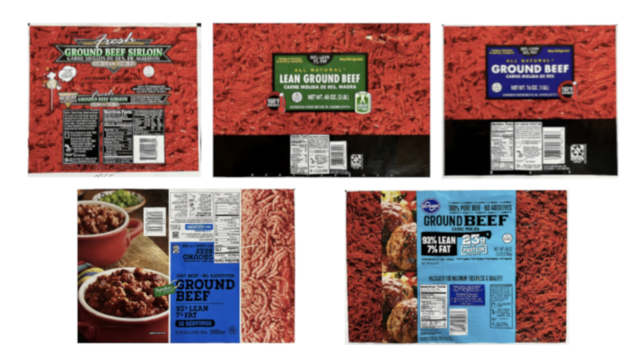
The products subject to recall bear establishment number “EST. 965” inside the USDA mark of inspection or printed next to the time stamp and use or freeze by date. To view photos of some of the products, click here.

  • WinCo, Fresh GROUND BEEF SIRLOIN 90% LEAN – 10% FAT, 16 oz. (1 lb.) chub, 18:37 through 18:48 L3, 1/11/2022
  • Wal-Mart, ALL NATURAL GROUND BEEF 90% LEAN 10% FAT, 16 oz. (1 lb.) chub, 18:49 through 19:18 L3, 1/11/2022
  • WinCo, Fresh GROUND BEEF 93% LEAN – 7% FAT, 16 oz. (1 lb.) chub, 19:19 through 21:14 L3, Use/Freeze by 1/11/22
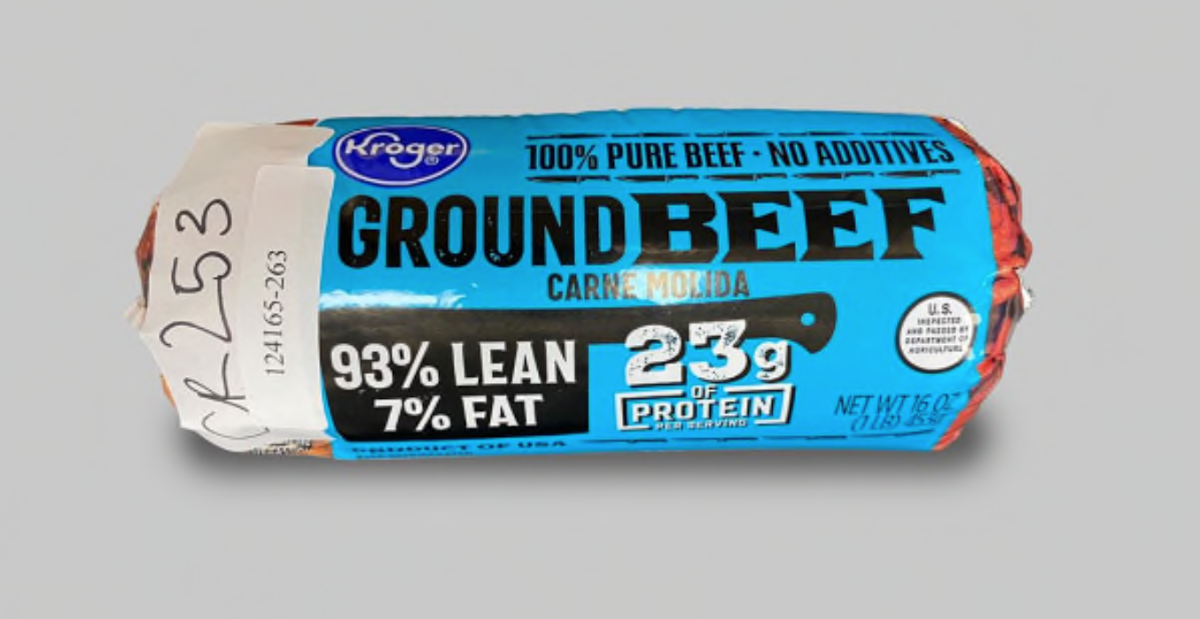
  • Kroger, Kroger GROUND BEEF 93% LEAN 7% FAT, 16 oz. (1 lb.) chub, 19:19 through 21:14 L3, Use/Freeze by 1/11/22
  • Albertsons, Signature Farms GROUND BEEF 93% LEAN/7% FAT, 16 oz. (1 lb.) chub, 19:19 through 21:14 L3, Use/Freeze by 1/11/22
  • Wal-Mart, ALL NATURAL LEAN GROUND BEEF 93% LEAN 7% FAT, 16 oz. (1 lb.) chub, 21:15 through 22:42 L3, 1/11/2022
  • Wal-Mart, ALL NATURAL LEAN GROUND BEEF 93% LEAN 7% FAT, 48 oz. (3 lb.) chub, 18:15 through 21:18 L1, 1/11/2022
  • Win-Co, Fresh GROUND BEEF 93% LEAN – 7% FAT, 48 oz. (3 lb.) chub, 18:15 through 21:18 L1, 1/11/2022
  • Kroger, GROUND BEEF 93% LEAN 7% FAT, 48 oz. (3 lb.) chub, 18:15 through 21:18 L1, 1/11/2022
  • Albertsons, Signature Farms GROUND BEEF 93% LEAN 7% FAT, 48 oz. (3 lb.) chub, 18:15 through 21:18 L1, 1/11/2022
  • Wal-Mart, ALL NATURAL LEAN GROUND BEEF 93% LEAN 7% FAT, 48 oz. (3 lb.) chub, 21:00 through 22:19 L2, 1/11/2022

Consumer Reports was first to alert the public to not eat the ground beef sold at Kroger and other supermarkets because independent testing showed positive results for contamination with the potentially deadly E. coli O157:H7.

The public alert came after the organization tested a sample of ground beef sold under the Kroger brand, but the other products may be involved, according to the alert released Jan. 5. One piece of beef can contaminate a a large quantity of product when it is ground with other meat.

Not naming the restaurant and the dates of exposure deny Pennsylvania residents vital information in order to know if they were exposed and to have time to receive a potentially life-saving vaccination.

The Pennsylvania Department of Health and the Montgomery County Public Health Department announced on January 5th that they are investigating and outbreak of hepatitis A virus infections associated with an Italian restaurant in Montgomery County in southeastern Pennsylvania.

According to the departments, there are eight confirmed infections among residents of Pennsylvania in this outbreak. Of the seven with information available, six were hospitalized. The death of one is under investigation.

However, health officials did not name the restaurant or the town in which it was located.

The health departments recommend that health care providers:

  • Consider hepatitis A as a diagnosis in anyone with jaundice or elevated liver enzymes and clinically compatible symptoms of acute hepatitis.
  • Confirm a hepatitis A diagnosis by testing serum for presence of immunoglobulin M (IgM) antibodies to hepatitis A virus and report all cases via PA-NEDSS.
  • Encourage persons who have been exposed recently to HAV and who have not been vaccinated to be administered one dose of single-antigen hepatitis A vaccine or immune globulin (IG) as soon as possible, within 2 weeks after exposure.

According to the advisory, hepatitis A is a highly contagious, vaccine-preventable liver infection caused by the hepatitis A virus, with severe infections lasting weeks to months. Hepatitis A usually spreads when a person unknowingly ingests the virus from an object, food, or drink contaminated with a small amount of undetected feces from an infected person. Hepatitis A can also spread from close personal contact with an infected person – like and infected food service worker.

The departments of health should immediately inform the public of the name of the restaurant and the dates of potential exposure so customers can be “administered one dose of single-antigen hepatitis A vaccine or immune globulin (IG) as soon as possible, within 2 weeks after exposure.”

Additional Resources

Since the last update on December 30, 2021, CDC updated the case definition and removed three illnesses from this outbreak investigation. These three people were infected with E. coli bacteria that were not as closely related genetically to the rest in this outbreak. None of the three sick people reported eating Organic Power Greens.

As of January 6, 2022, a total of 10 people infected with the outbreak strain of E. coli O157:H7 have been reported from four states. Illnesses started on dates ranging from November 27, 2021, to December 9, 2021.

Alaska – 2
Ohio – 1
Oregon – 1
Washington – 6

Sick people range in age from 26 to 79 years, with a median age of 59, and 100% are female. Of ten people with information available, four have been hospitalized and one person developed a type of kidney failure called hemolytic uremic syndrome (HUS). No deaths have been reported.

The true number of sick people in an outbreak is likely much higher than the number reported, and the outbreak may not be limited to the states with known illnesses. This is because many people recover without medical care and are not tested for E. coli. In addition, recent illnesses may not yet be reported as it usually takes 3 to 4 weeks to determine if a sick person is part of an outbreak.

State and local public health officials interviewed people about the foods they ate in the week before they got sick. Nine people reported eating Organic Power Greens sold under the Simple Truth Organic brand (8) and the Nature’s Basket brand (1), and seven people’s shopper records showed the purchase of these products. Both brands of Organic Power Greens have the same mix of leafy greens: organic spinach, mizuna, kale, and chard.

53 sick, 30 hospitalized, 4 with kidney failure and 3 dead

E. coli and Lettuce 1: As of December 29, 2021, 13 people infected with the outbreak strain of E. coli O157:H7 have been reported from six states. Illnesses started on dates ranging from November 27, 2021, to December 9, 2021. Sick people range in age from 4 to 79 years, with a median age of 54, and 92% are female. Of 12 people with information available, four have been hospitalized and one person developed a type of kidney failure called hemolytic uremic syndrome (HUS). No deaths have been reported.

CDC is advising not to eat Simple Truth Organic Power Greens and Nature’s Basket Organic Power Greens with “best if used by” dates through December 20, 2021. Investigators are working to determine if additional products may be contaminated.

E. coli and Lettuce 2: As of December 3, 2021, a total of 14 people infected with the outbreak strain of E. coli O157:H7 have been reported from nine states. Illnesses started on dates ranging from October 13, 2021, to October 27, 2021. Sick people range in age from 2 to 76 years, with a median age of 26, and 79% are female. Of 12 people with information available, 4 have been hospitalized and 3 developed a type of kidney failure called hemolytic uremic syndrome (HUS). No deaths have been reported.

CDC reported that officials in Minnesota found E. coli O157:H7 in a package of leftover Josie’s Organics baby spinach collected from a sick person’s home. Whole genome sequencing (DNA fingerprinting for bacteria) showed that the E. coli O157:H7 in the leftover package of spinach is closely related to bacteria isolated from ill people. This means that the person likely got sick from eating the spinach.

Listeria and Lettuce 1:  As of Dec. 23, 2021, the CDC reported that there are sixteen illnesses related to this outbreak in thirteen states. Twelve people have been hospitalized. Two deaths have been reported.

Dole Fresh Vegetables, Inc., is voluntarily recalling from the market all Dole-branded and private label packaged salads processed at its Bessemer City, NC and its Yuma, AZ production facilities due to possible contamination with Listeria monocytogenes. and is also suspending operations at both facilities to conduct an extensive cleaning and sanitation protocol. Products subject to the voluntary recall are identified by a product lot code beginning with either the letter “N” or “Y” in the upper right-hand corner of the package (see examples below) and will have a “Best if Used By” date between November 30, 2021, and January 8, 2022.

Listeria and Lettuce 2:  According to the CDC, as of December 21, 2021, 10 people infected with the outbreak strain of Listeria monocytogenes have been reported from eight states. One death has been reported. Illnesses started on dates ranging from July 26, 2016 to October 19, 2021.

As a part of routine sampling, the Michigan Department of Agriculture and Rural Development (MDARD) collected a product sample of Fresh Express Sweet Hearts salad mix with a Use-By-Date of December 8, 2021 for testing. The sample tested positive for Listeria monocytogenes and subsequent whole genome sequencing (WGS) analysis determined that the Listeria monocytogenes present in the samples matches the strain that has caused illnesses in this outbreak. In response to the sample results and the ongoing outbreak investigation, Fresh Express voluntarily ceased production at the Streamwood, IL, facility and initiated a recall of certain varieties of its branded and private label salad products produced at the company’s Streamwood, Illinois facility. The recall includes all Use-By Dates of fresh salad items with product codes Z324 through Z350.

I suppose it should not be a surprise. E. coli outbreaks associated with lettuce, specifically the “pre-washed” and “ready-to-eat” varieties, are by no means a new phenomenon. In fact, the frequency with which this country’s fresh produce consuming public has been hit by outbreaks of pathogenic bacteria is astonishing. Here are just a sample of E. coli outbreaks based on information gathered by the Center for Science in the Public Interest, Kansas State University and the Centers for Disease Control and Prevention:

Date Vehicle Etiology Confirmed
Cases
States/Provinces
July 1995 Lettuce (leafy green; red; romaine) E. coliO157:H7 74 1:MT
Sept. 1995 Lettuce (romaine) E. coliO157:H7 20 1:ID
Sept. 1995 Lettuce (iceberg) E. coliO157:H7 30 1:ME
Oct. 1995 Lettuce (iceberg; unconfirmed) E. coliO157:H7 11 1:OH
May-June 1996 Lettuce (mesclun; red leaf) E. coliO157:H7 61 3:CT, IL, NY
May 1998 Salad E. coliO157:H7 2 1:CA
Feb.-Mar. 1999 Lettuce (iceberg) E. coliO157:H7 72 1:NE
Oct. 1999 Salad E. coli O157:H7 92 3:OR, PA, OH
Oct. 2000 Lettuce E. coli O157:H7 6 1:IN
Nov. 2001 Lettuce E. coli O157:H7 20 1:TX
July-Aug. 2002 Lettuce (romaine) E. coliO157:H7 29 2:WA, ID
Nov. 2002 Lettuce E. coli O157:H7 13 1:Il
Dec. 2002 Lettuce E. coli O157:H7 3 1:MN
Oct. 2003-May 2004 Lettuce (mixed salad) E. coliO157:H7 57 1:CA
Apr. 2004 Spinach E. coli O157:H7 16 1:CA
Nov. 2004 Lettuce E. coli O157:H7 6 1:NJ
Sept. 2005 Lettuce (romaine) E. coli O157:H7 32 3:MN, WI, OR
Sept. 2006 Spinach (baby) E. coli O157:H7 and other serotypes 205 Multistate and Canada
Nov./Dec. 2006 Lettuce E. coli O157:H7 71 4:NY, NJ, PA, DE
Nov./Dec. 2006 Lettuce E. coli O157:H7 81 3:IA, MN, WI
July 2007 Lettuce E. coli O157:H7 26 1:AL
May 2008 Romaine E. coli O157:H7 9 1:WA
Oct. 2008 Lettuce E. coli O157:H7 59 Multistate and Canada
Nov. 2008 Lettuce E. coli O157:H7 130 Canada
Sept. 2009 Lettuce: Romaine or Iceberg E. coli O157:H7 29 Multistate
Sept. 2009 Lettuce E. coli O157:H7 10 Multistate
April 2010 Romaine E. coli O145 33 5:MI, NY, OH, PA, TN
Oct. 2011 Romaine E. coli O157:H7 60 Multistate
April 2012 Romaine E. coli O157:H7 28

1:CA

Canada

June 2012 Romaine E. coli O157:H7 52 Multistate
Sept. 2012 Romaine E. coli O157:H7 9 1:PA
Oct. 2012 Spinach and Spring Mix Blend E. coli O157:H7 33 Multistate
Apr. 2013 Leafy Greens E. coli O157:H7 14 Multistate
Aug. 2013 Leafy Greens E. coli O157:H7 15 1:PA
Oct. 2013 Ready-To-Eat Salads E. coli O157:H7 33 Multistate
Apr. 2014 Romaine E. coli O126 4 1:MN
Apr. 2015 Leafy Greens E. coli O145 7 3:MD, SC, VA
June 2016 Mesclun Mix E. coli O157:H7 11 3:IL, MI, WI
Nov. 2017 Leafy Greens E. coli O157:H7 67 Multistate and Canada
Mar. 2018 Romaine E. coli O157:H7 219 Multistate and Canada
Oct. 2018 Romaine E. coli O157:H7 62 Multistate and Canada