United State illnesses occurred between 9/6/2021 – 12/18/2021 – First recall 2/17/22

Recalled products were distributed to the following countries in addition to the United States: Australia, Bahrain, Barbados, Bermuda, Canada, Chile, China, Colombia, Costa Rica, Dominican Republic, Ecuador, Egypt, Guam, Guatemala, Hong Kong, India, Indonesia, Israel, Jordan, Kuwait, Lebanon, Malaysia, Mexico, New Zealand, Oman, Peru, Puerto Rico, Qatar, Saudi Arabia, Singapore, South Africa, Sudan, Taiwan, Thailand, United Arab Emirates, United Kingdom, and Vietnam ANI South.

FDA: Findings to date include several positive Cronobacter results from environmental samples taken by FDA at Abbott in Sturgis, Michigan facility.

FDA: A review of the Abbott ’s internal records also indicate environmental contamination with Cronobacter sakazakii.

FDA: Abbott destroyed product due to the presence of Cronobacter sakazakii.

Yesterday, the U.S. Food and Drug Administration announced it is investigating consumer complaints of Cronobacter sakazakii and Salmonella Newport infections. All of the cases are reported to have consumed powdered infant formula produced from Abbott Nutrition’s Sturgis, Michigan facility. As a result of the ongoing investigation, along with the U.S. Centers for Disease Control and Prevention and state and local partners, the FDA is alerting consumers to avoid purchasing or using certain powdered infant formula products produced at this facility.

The FDA is advising consumers not to use Similac, Alimentum, or EleCare powdered infant formulas if:

  • the first two digits of the code are 22 through 37; and
  • the code on the container contains K8, SH or Z2; and
  • the expiration date is 4-1-2022 (APR 2022) or later.

The FDA is investigating complaints of four infant illnesses from three states. All four cases related to these complaints were hospitalized and Cronobacter may have contributed to a death in one case. The FDA has initiated an onsite inspection at the facility. Findings to date include several positive Cronobacter sakazakii results from environmental samples taken by the FDA and adverse inspectional observations by the FDA investigators. A review of the firm’s internal records also indicate environmental contamination with Cronobacter sakazakii and the firm’s destruction of product due to the presence of Cronobacter.

Additional Information:

  • Products made at the Sturgis, Michigan facility can be found across the U.S. and were likely exported to other countries.
  • Products that do not contain the information listed above are not impacted. The FDA advisory does not include liquid formula products or any metabolic deficiency nutrition formulas. Consumers should continue to use all products not covered by the advisory.
  • To date, this investigation has been associated with four illnesses (three for Cronobacter and one for Salmonella) spanning the following states: MN, OH and TX. All four cases related to these complaints were hospitalized and Cronobacter may have contributed to a death in one case.
  • Cronobacter bacteria can cause severe, life-threatening infections (sepsis) or meningitis (an inflammation of the membranes that protect the brain and spine). Symptoms of sepsis and meningitis may include poor feeding, irritability, temperature changes, jaundice (yellow skin and whites of the eyes), grunting breaths and abnormal movements. Cronobacter infection may also cause bowel damage and may spread through the blood to other parts of the body.
  • Parents and caregivers of infants who have used these products, and are concerned about the health of their child, should contact their child’s health care provider. If your child is experiencing any of these symptoms, you should notify your child’s healthcare provider and seek medical care for your child immediately.
  • Salmonella are a group of bacteria that can cause gastrointestinal illness and fever called salmonellosis. Most people with salmonellosis develop diarrhea, fever and abdominal cramps. More severe cases of salmonellosis may include a high fever, aches, headaches, lethargy, a rash, blood in the urine or stool, and in some cases, may become fatal.
  • Parents and caregivers should never dilute infant formula and should not make or feed homemade infant formula to infants.
  • If your regular formula is not available, contact your child’s healthcare provider for recommendations on changing feeding practices.

The FDA is continuing to investigate and will provide additional consumer safety information when it becomes available.
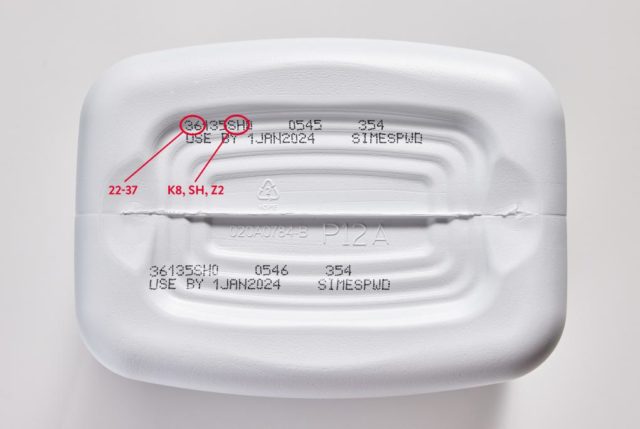
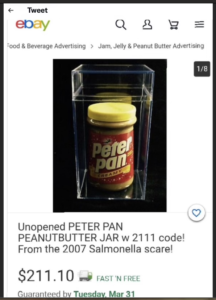
A week ago one of my food safety followers on Twitter sent me this photo that was apparently circulating offering for sale on eBay a product that was recalled over a decade ago.  They asked if it was legal for someone to sell a recalled food product.
First, after a quick search on eBay I did not see the product still for sale, but it did pique my interest in the question.

Setting aside that it is stupid to try and sell (at an outrageous mark-up) a recalled product that was known to be contaminated with Salmonellathe answer is that it is illegal as viewed from the FDA and  is  against eBay’s own policies.

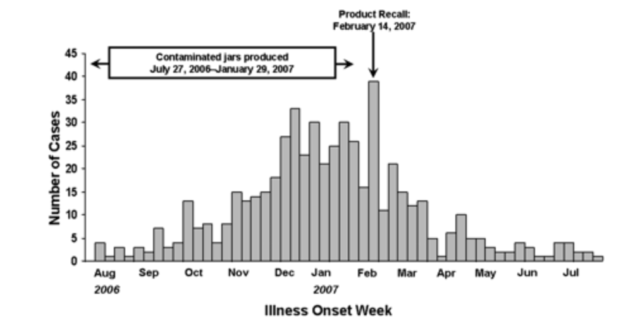
For a bit of history, this Salmonella outbreak sickened a total of 715 cases that were identified in 48 states. Patients had a median age of 53 years (range, 2 months to 95 years); 519 of 708 (73%) were female. Among 707 Salmonella isolates where specimen site was available, 421 (60%) were from stool specimens, 264 (37%) were from urine specimens, and 22 (3%) were from other or multiple specimen sources. The median age of patients with urine isolates was 62 years (range, 2 to 94 years), compared with 48 years (range, 2 months to 95 years) for patients with stool isolates. Ninety-four percent (247/263) of patients with urine isolates were female, compared with 62% (257/416) of patients with stool isolates .

Although the outbreak slowed after the  product was recalled in February, cases continued to be confirmed after this time period. The cases were ultimately linked to the consumption of Peter Pan and Great Value brand peanut butter manufactured in ConAgra’s Georgia peanut butter plant. Any Peter Pan or Great Value brand peanut butter beginning with product code 2111 was recalled in response to the outbreak investigation.

So, here is the illegal part.

The Federal Food Drug and Cosmetic Act under 21 US §331 – Prohibited acts:

21 US §321 defines “person” to include “individual, partnership, corporation, and association.”

21 US §331 prohibits (a) the introduction or delivery for introduction into interstate commerce of any food….that is adulterated.

21 US §333 then states: (1) any person who violates a provision of section 331 of this title shall be imprisoned for not more than one year or fined not more than $1,000 or both.

Clearly, any person selling a recalled product – for whatever purpose – is doing an illegal act under the Federal Food Drug and Cosmetic Act .

Also, eBay’s Product Safety Policy make clear that it is against its own policy to sell the product.  The rule is that selling products that pose a health or safety hazard aren’t allowed.  To ensure the safety and well-being of our members, eBay does not allow listings for items that are banned, recalled, or dangerous to a buyer. The following types of items are not allowed:

  • Products recalled by a manufacturer or government agency
  • Products where the sale of the product is prohibited by law or regulation
  • Products that pose a health or safety hazard as specified by any government agency

Well, that all seems pretty clear.

Someone also reminded me that we had a similar problem in 2017, both with online and retail sales of a recalled product.

The CDC reported that thirty-two people infected with the outbreak strains of STEC O157:H7 were reported from 12 states.

Illnesses started on dates ranging from January 4, 2017 to April 18, 2017. Ill people ranged in age from 1 to 70 years, with a median age of 9. Twenty-six (81%) of the 32 ill people were younger than 18 years. Among ill people, 59% were male. Twelve ill people were hospitalized, and 9 people developed hemolytic uremic syndrome, a type of kidney failure.

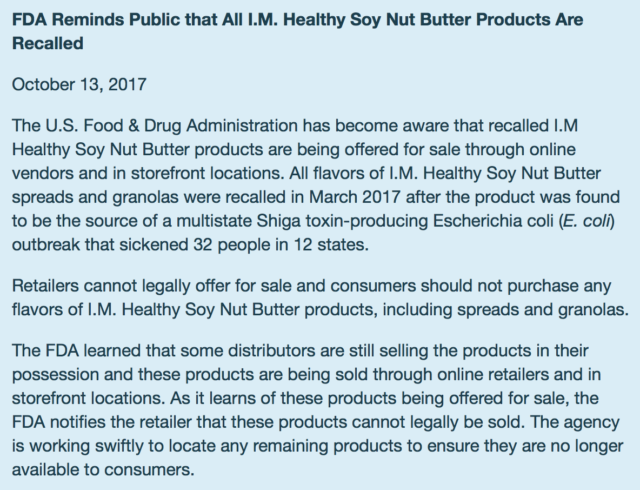
The recall happened on March 3, 2017, but recalled product continued to surface for months until the FDA posted this notice:

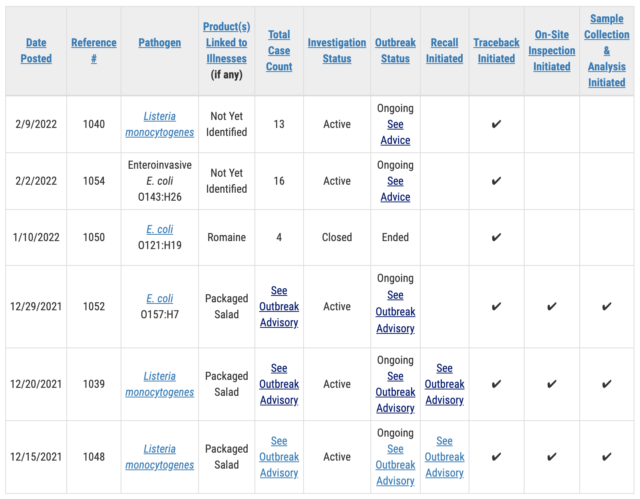
Well the bad news about outbreaks linked to leafy greens they are spilling over from  2021 to 2022.  The more things change, the more things stay the same.

Outbreaks associated with lettuce, specifically the “pre-washed” and “ready-to-eat” varieties, are by no means a new phenomenon. In fact, the frequency with which this country’s fresh produce consuming public has been hit by outbreaks of pathogenic bacteria is astonishing. Here are just a sample of outbreaks based on information gathered by the Center for Science in the Public Interest, Kansas State University and the Centers for Disease Control and Prevention:

Date Vehicle Etiology Confirmed
Cases
States/Provinces
July 1995 Lettuce (leafy green; red; romaine) E. coli O157:H7 74 1: MT
Sept. 1995 Lettuce (romaine) E. coli O157:H7 20 1: ID
Sept. 1995 Lettuce (iceberg) E. coli O157:H7 30 1: ME
Oct. 1995 Lettuce (iceberg; unconfirmed) E. coli O157:H7 11 1: OH
May-June 1996 Lettuce (mesclun; red leaf) E. coli O157:H7 61 3: CT, IL, NY
May 1998 Salad E. coli O157:H7 2 1: CA
Feb.-Mar. 1999 Lettuce (iceberg) E. coli O157:H7 72 1: NE
Oct. 1999 Salad E. coli O157:H7 92 3: OR, PA, OH
Oct. 2000 Lettuce E. coli O157:H7 6 1: IN
Nov. 2001 Lettuce E. coli O157:H7 20 1: TX
July-Aug. 2002 Lettuce (romaine) E. coli O157:H7 29 2: WA, ID
Nov. 2002 Lettuce E. coli O157:H7 13 1: Il
Dec. 2002 Lettuce E. coli O157:H7 3 1: MN
Oct. 2003-May 2004 Lettuce (mixed salad) E. coli O157:H7 57 1: CA
Apr. 2004 Spinach E. coli O157:H7 16 1: CA
Nov. 2004 Lettuce E. coli O157:H7 6 1: NJ
Sept. 2005 Lettuce (romaine) E. coli O157:H7 32 3:MN, WI, OR
Sept. 2006 Spinach (baby) E. coli O157:H7 and other serotypes 205 Multistate and Canada
Nov./Dec. 2006 Lettuce E. coli O157:H7 71 4: NY, NJ, PA, DE
Nov./Dec. 2006 Lettuce E. coli O157:H7 81 3: IA, MN, WI
July 2007 Lettuce E. coli O157:H7 26 1: AL
May 2008 Romaine E. coli O157:H7 9 1: WA
Oct. 2008 Lettuce E. coli O157:H7 59 Multistate and Canada
Nov. 2008 Lettuce E. coli O157:H7 130 Canada
Sept. 2009 Lettuce: Romaine or Iceberg E. coli O157:H7 29 Multistate
Sept. 2009 Lettuce E. coli O157:H7 10 Multistate
April 2010 Romaine E. coli O145 33 5: MI, NY, OH, PA, TN
Oct. 2011 Romaine E. coli O157:H7 60 Multistate
April 2012 Romaine E. coli O157:H7 28

1: CA

Canada

June 2012 Romaine E. coli O157:H7 52 Multistate
Sept. 2012 Romaine E. coli O157:H7 9 1: PA
Oct. 2012 Spinach and Spring Mix Blend E. coli O157:H7 33 Multistate
Apr. 2013 Leafy Greens E. coli O157:H7 14 Multistate
Aug. 2013 Leafy Greens E. coli O157:H7 15 1: PA
Oct. 2013 Ready-To-Eat Salads E. coli O157:H7 33 Multistate
Apr. 2014 Romaine E. coli O126 4 1:MN
Apr. 2015 Leafy Greens E. coli O145 7 3: MD, SC, VA
June 2016 Mesclun Mix E. coli O157:H7 11 3: IL, MI, WI
Jan. 2016 Mixed Greens Listeria 19 Multistate
Nov. 2017 Leafy Greens E. coli O157:H7 67 Multistate and Canada
Mar. 2018 Romaine E. coli O157:H7 240 Multistate and Canada
Oct. 2018 Romaine E. coli O157:H7 62 Multistate and Canada
Nov. 2019 Romaine E. coli O157:H7 171 Multistate and Canada
Nov. 2019 Mixed Greens E. coli O157:H7 38 Multistate and Canada
Dec. 2020 Leafy Greens E. coli O157:H7 40 Multistate
Nov. 2021 Baby Spinach E. coli O157:H7 15 Multistate
Dec. 2021 Mixed Greens E. coli O157:H7 10 Multistate
Dec. 2021 Mixed Greens Listeria 10 Multistate
Dec. 2021 Mixed Greens Listeria 17 Multistate


We were proud to donate $100,000 to start the fellowship.

The national nonprofit public health organization STOP Foodborne Illness is accepting applicants for its 2022-2023 Dave Theno Food Safety Fellowship. Applications must be submitted by March 31.

The fellowship program is a partnership with the Michigan State University Online Food Safety Program. The fellow will live in Chicago and work with STOP Foodborne Illness while completing a 12-credit online Food Safety Certificate with Michigan State University. The fellowship includes benefits, salary and tuition. The program cannot sponsor international students.

Those interested in applying for the fellowship can find out more here.

Dave passed in 2017. In 2013, I wrote a piece on my blog about “Why I Love my Job.”  Its ironic how much of my job and my life over they last 25 years has been intertwined with Dave Theno.  I will miss the occasions we shared a good meal – Dave with a rare steak and mine well-done – with always a very good bottle of wine.  We will all miss his humanity and leadership.

Here is the piece I wrote:

A few months ago I was asked to write something by WSBA about my practice and life as a lawyer.  The ask was something like this:

Mr. Marler, I noted that you are a (“the” – I must admit I added that) preeminent litigator in food poisoning cases in our state (well, actually the “world” – I must admit I added that too). Our members would love an article from you describing a significant case or client that resonated with you, or a description of what it is like to practice in your area of law.

I thought a lot about the ask and my 20 plus years of practice, and the fact that I may well be at the downslope of a job that I truly love.  In a not so often-quite moment, I thought about the beginning of what became both my passion and my job.  Honestly, it has had very little to do with being a lawyer.

I had just turned 35-years-old and was only five years out of Law School, I was a young lawyer in a job that seemed quite dead-end, and then my world changed.

Lauren Beth Rudolph died on December 28, 1992 in her mother’s arms due to complications of an E. coliO157:H7 infection – Hemolytic Uremic Syndrome – also know as acute kidney failure.  She was only 6 years, 10 months, and 10 days old when she died. The autopsy described her perforated bowel as being the consistency of “jelly.”  Her death, the deaths of three other children, and the sicknesses of 600 others, were eventually linked to E. coli O157:H7 tainted hamburger produced by Von’s and served undercooked at Jack in the Box restaurants on the West Coast during late 1992 and January 1993.  I pushed myself to the front of the pack of lawyers.  Roni Rudolph, Lauren’s mom, I have known for nearly 20 years.

Dave Theno became head of Jack in the Box’s food safety shortly after the 1992-1993 outbreak. I too have known Dave for 20 years, mostly because I spent several days deposing (he would say – grilling/torturing) him over the course of the multi-year, multi-state litigation.  However, a decade after spending such quality time (for me anyway) with him, I only recently learned a significant fact about Dave – one that made me admire him even more – one that I think, that all leaders in corporate food safety, or any position of authority, should emulate.

Last year Dave and I shared the stage at the Nation Meat Association (NMA) annual “Meating” in Tampa as an odd pair of keynote speakers. The NMA is an association representing meat processors, suppliers, and exporters.  Dave, spoke just before I did and was rightly lauded as someone who takes food safety to heart.  However, it was his story about Lauren Rudolph and his relationship with Roni that struck me in a physical way.

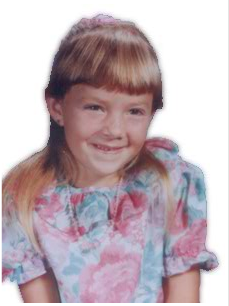
Dave told the quiet audience about Lauren’s death. He too knew the same autopsy report.  Dave told the audience that the death of Lauren and his friendship with Roni had changed him also in a physical way. He told us all that he had carried a picture of Lauren in his briefcase everyday since he had taken the job at Jack in the Box. He told us that every time he needed to make a food safety decision – who to pick as a supplier, what certain specifications should be – he took out Lauren’s picture and asked, “What would Lauren want me to do?”

I thought how powerful that image was. The thought of a senior executive of any corporation holding the picture of a dead child seeking guidance to avoid the next possible illness or death is stunning, but completely appropriate.

I hugged Dave and we promised to get together again – sometime, someday.

Shortly after leaving Tampa, I spent time with a family in South Carolina whose 4 year old ate cookie dough tainted with E. coli O157:H7 and suffered months of hospitalizations, weeks of dialysis and seizures. She faces a lifetime of complications despite oversight by the Food and Drug Administration of the food she consumed.

After leaving South Carolina I headed to Cleveland, Ohio where I sat across the kitchen table with a family who lost their only daughter, Abby, because she died from an E. coliO157:H7 infection from meat inspected by the United States Department of Agriculture Food Safety Inspection Services.

Neither head of either agency, nor the president of either corporation, whose product took the life of one and nearly the life of the other, ever visited either family, and, that is a shame.

In 20 years of litigation, in 20 years of spending time with Lauren’s or Abby’s family, I am changed.  I see the world far differently than most do now.

If I had any advice to offer to corporate or governmental leaders – run your departments like Dave ran food safety at Jack in the Box. Go meet the families that Dave and I have met.  Sit across their kitchen tables. Go to their child’s hospital room and see more tubes and wires than you can count. Understand what these people have lived though. Take their stories into your heart.

It is hard, very hard, but it will give you a real reason to do your jobs and to love it.

As of January 28, there have been 14 laboratory-confirmed cases of E. coli O157 illness linked to this outbreak in the following provinces: Alberta (13) and Saskatchewan (1). Individuals became sick between early December 2021 and early January 2022. No deaths or hospitalizations have been reported. Individuals who became ill are between 0 and 61 years of age. The majority of cases (64%) are female.

The CFIA issued a food recall warning on January 28, 2022 for Hankook (Korean characters only) brand Original Kimchi sold in 2L containers with a net weight of 1670 g, UPC code 6 23431 00030 4, and best before date January 29, 2022. The recalled product was distributed in British Columbia, Alberta, Saskatchewan, and Manitoba.

As of January 21, there have been 110 laboratory-confirmed cases of Salmonella Enteritidis illness investigated in: British Columbia (42), Alberta (49), Saskatchewan (4), Manitoba (13) and Ontario (2). The illnesses reported in Ontario are related to travel to Alberta and British Columbia. Individuals became sick between early September 2021 and late December 2021. Four individuals have been hospitalized. No deaths have been reported. Individuals who became ill are between 1 and 89 years of age. The majority of cases (64%) are female.

The CFIA issued food recall warnings on December 14 and 19 for Alasko brand frozen whole kernel corn; and a secondary recall for Fraser Valley Meats brand frozen whole kernel corn on December 18. Several additional secondary recalls have been issued for products that were made using the recalled Alasko brand frozen whole kernel corn.

A new nationwide poll of 1,000 registered voters reveals incredibly high support for stricter regulations on poultry production aimed at reducing Salmonella poisoning and other illnesses.Here is the press release.

The following are key findings from the survey:

Americans display fairly high awareness of Salmonella poisoning. Overall, 87% of voters have heard about Salmonella poisoning and other illnesses related to eating contaminating poultry. One-in-three have heard a lot about this. Awareness is highest among women and among voters under 50 years old.

Voters overwhelmingly favor a proposal for the USDA to adopt stricter regulations on poultry producing aimed at reducing Salmonella poisoning and other illnesses. In total, 86% of voters favor this proposal, including a stunning 50% who strongly favor it. Support crosses party lines with 89% of Democrats, 84% of independents, and 84% of Republicans favoring the proposal.

Support is equally strong for tougher enforcement of poultry safety standards. An equal 86% of voters favor the following proposal to strengthen enforcement. This proposal also garners bipartisan support with 88% of Democrats, 82% of independents, and 86% of Republicans backing it. The proposal for tougher enforcement of safety standards reads:

Here’s another proposal: If a company fails to meet a safety standard because its poultry product is contaminated by dangerous bacteria, it would be prohibited from selling the contaminated products, and if it fails to meet safety standards repeatedly, the company would not be able to sell any poultry products until it demonstrates that it took steps to prevent contamination in the future.

Support for stronger poultry safety standards remains strong after voters hear arguments in favor of and against it. After voters hear one argument in favor of and one argument against the stronger poultry safety regulations proposal, 74% still favor it, while just 17% oppose it. The arguments in favor of and against it read:

Supporters of the proposal say current poultry safety standards are scientifically out of date and do not protect against serious contamination of chicken and turkey, which itself makes people sick and can lead to other products like lettuce being contaminated in the kitchen by chicken and turkey. We need stronger, science-based standards and enforcement policies to protect the health and safety of Americans.

Opponents of the proposal say it’s an unnecessary new government regulation that will hurt family farmers and drive up the cost of poultry for American consumers. Raw poultry always has some bacteria and needs to be cooked. Instead of new government regulations, we need to educate people on how important it is to fully cook poultry before serving it.

Methodology

GBAO designed the questionnaire for this national survey of registered voters in the U.S. The survey was conducted November 11-15, 2021. The survey of 1,000 registered voters is subject to a margin of error of 3.1 percentage points at the 95% confidence level. The survey was conducted online using a web-based panel. GBAO contracted the research company Dynata to administer the survey by email invitation to its web-based panel, which is regularly updated and consists of over 17 million Americans. The sample was weighted on key demographic variables based on a population of registered voters.

Over 200 died, many were the young and the unborn who will never turn 4.

In March of this year in will be 4 years since I boarded a flight from Seattle to Johannesburg (20 plus hour flight) to speak at a food safety conference just days after the South African health authorities announced that a Listeria outbreak had been linked to a product named polony manufactured by the largest food manufacturer in Africa.

I recall how similar it felt to the early days of the Jack-in-the-Box E. coli outbreak of 1993 – how everyone seemed honestly shocked that such a tragedy could happen.

I have spent the last 4 years working (being 10 hours behind has required far too many late nights and early morning calls) with a cadre of amazing lawyers and more amazing staff moving forward in the first foodborne illness class action in Africa.  We have much to do to find justice to the more than 1,000 sickened and their families.  I am saddened by the pace of the litigation, but determined to take care of our class members – we have to work harder.

Sadly, what I warned about in 2013 came to pass.

Section 61 of the Consumer Protection Act, 2008 (“CPA”) provides that producers, importers, distributors and/or retailers of goods (collectively the “supplier(s)”) may be held liable for any harm caused as a result of the supply of unsafe goods, product failure, a defect or hazard in the product, inadequate instructions for the use of goods or warnings related to any possible hazard that might be associated with the product, whether or not there was “fault” on the part of the supplier.

BACKGROUND

In 2017 and 2018, the world’s largest and deadliest outbreak of listeriosis occurred in multiple provinces of South Africa, as seen in Figure 1. The outbreak was caused by contaminated polony, a ready-to-eat, processed meat product. Ready-to-eat, processed meats are a well-known vehicle for listeriosis outbreaks (Thomas et al., 2020). The Minister of Health declared that there was an outbreak of listeriosis on December 5, 2017, that was linked to polony emanating from Tiger Brands’ Enterprise Foods production facility in Polokwane on March 4, 2018.

Figure 1. Incidence of Laboratory-Confirmed Listeriosis Cases during the Outbreak Period, According to South African Districts (Thomas et al., 2020).

Cases were reported from across the country, with most cases reported from Gauteng Province (58%). Women accounted for 55% of total cases. The ages of cases ranged from birth to 93 years. Neonates (aged £ 28 days) were the most affected age group, accounting for 43% of cases. This was followed by adults of 15 to 49 years of age, accounting for 32% of cases. The disease outcome was known for 806/1,060 (76%) of cases; 27% (216/806) had the known outcome “died” (Smith et al., 2019).

Listeriosis is a serious foodborne infection with a case-fatality rate (“death rate”) of 20-30% (Thomas et al., 2020). People primarily affected by listeriosis have impaired cell-mediated immunity. This includes those who are pregnant, elderly, or immunocompromised from conditions such as HIV, chronic disease, or immunosuppressive therapy (Thomas et al., 2020). The specific outbreak strain associated with the outbreak was Listeria monocytogenes sequence type 6 (LmST6). There are two ways that listeriosis can manifest: febrile gastroenteritis and invasive listeriosis (Coulombier). Invasive listeriosis is characterized by bacteremia, meningitis, pneumonia, endocarditis, and sepsis (Smith et al., 2019).

A total of 1,060 cases were reported during the outbreak period of January 11, 2017, to July 17, 2018 (Figure 2). The outbreak period was defined as a duration of time during which case numbers exceeded and remained above a weekly threshold of five cases per epidemiological week (Thomas et al., 2020). At the peak of the outbreak (mid-November 2017), 41 listeriosis cases were reported in a single week. Prior to this outbreak, listeriosis was not a reportable disease in South Africa; therefore, information is not available on the prevalence, epidemiology, and description of clusters/outbreaks on listeriosis. Due to the lack of surveillance data, the baseline number of listeriosis cases was estimated from counts of listeriosis cases in 2016.

It is known that in 2015 and 2016, clusters of listeriosis occurred in South Africa. The 2015 listeriosis cluster involved 7 cases total, and the predominant strain was Lm ST6. However, researchers found that the 2015 cluster did not constitute an outbreak (Shuping et al., 2015). For the 2016 cluster, retrospective analysis of Lm cases from the years 2012-2016 was used to calculate the expected case numbers for years 2013, 2014, 2015, and 2016 in the Gauteng province (Mathebula et al., 2016). Because there were only 3 cases in the 2016 outbreak, researchers needed to estimate the baseline number of cases. When determining if a cluster of diseases is classified as an outbreak or epidemic, it is essential to know what the baseline number of illnesses is in the population of interest. An epidemic refers to an increase in the number of cases of a disease, above what is normally expected in that population in that area, and an outbreak is defined the same but is often used for a more limited geographic area (Center for Disease Control and Prevention [CDC], 2012).

Figure 2. Distribution of Laboratory-Confirmed Cases of Listeriosis, According to Outbreak Week and Major Events (January 1, 2017 to August 21, 2018) (Thomas et al., 2020).

CASE IDENTIFICATION AND MICROBIOLOGICAL INVESTIGATION

Case definitions are used in outbreak investigations to help identify cases who are associated with the outbreak. A case definition includes criteria such as the subject population, implicated location, time, clinical features, and/or laboratory test results if available (CDC, 2012).

The initial case definition for this outbreak included all cases of listeriosis that occurred in South Africa from 2017 to 2018. The initial case definition was appropriate due to the lack of whole-genome sequencing (WGS) data at the beginning of the outbreak. Multilocus sequencing typing (MLST) was used after to analyze the WGS results. Researchers discovered that 93% of the clinical isolates collected from cases in the outbreak period were Listeria monocytogenessequence type 6 (Lm ST6) (Thomas et al., 2020; Gerner-Smidt). The case definition later included sequence typing information to increase the likelihood of identifying a common source (Besser). This finding also showed that the outbreak was centered around the ST6 strain, meaning that any person infected with the ST6 strain, in South Africa, could have been considered a victim of this outbreak during the outbreak period, before the outbreak period (when the environmental samples tested positive for ST6), and after the outbreak period (when contaminated products could have still been present in homes) (Coulombier).

Figure 3. NCBI WGS Tree.

Although microbiological evidence is useful, a case definition without subtyping information can still be adequate in solving an outbreak (Besser). Multiple factors can be taken into consideration to determine if a case is associated with an outbreak regardless of if they were laboratory confirmed or not. As stated above, 93% of clinical isolates were ST6; however, not all isolates could be sequenced, due to the lack of laboratory resources and personnel available (Besser). Based on the high percentage of ST6 clinical isolates, we can assume that a similar number of non-sequenced isolates would have been classified as ST6 if sequencing could have been done (Coulombier). Another reason that we can assume that there is no difference between the distribution of sequence types among the non-sequenced samples and the distribution of sequence types observed in the sequenced samples is because the process of selecting case isolates to be sequenced was not biased. In the absence of other information, a listeriosis patient diagnosed during the outbreak period had a > 90% probability of being related to the outbreak even without confirmed laboratory results (Gerner-Smidt).

EPIDEMIOLOGIC INVESTIGATION

After detection of the outbreak, the Centre for Enteric Diseases, a part of the National Institute for Communicable Diseases, conducted a nested, case-control study that provided evidence that cases with Lm ST6 infections were more likely to have eaten polony than those with non-ST6 infections (Thomas et. al, 2020). In outbreak investigations, case-control analysis is performed to estimate the odds ratio for the association between specific food items and the outbreak-associated illness. For this nested case-control study, case patients were those with Lm ST6 infections, and control patients were people with non-ST6 listeriosis during the outbreak period. Results from this study show that the odds ratio was 8.55 with a 95% confidence interval of 1.66 – 43.35. An odds ratio is a measure of association between the odds of getting ill having consumed a specific food item versus the odds of being ill having not consumed the specific food item (Coulombier). An odds ratio of 8.55 signifies that the odds of having eaten polony in ST6 cases is 8.55 times greater than the odds of having eaten polony in non-ST6 cases. From the calculated confidence interval, we know that this result is significant because the confidence interval does not include the null value of 1, and that 95% of the time we can expect the true odds ratio to fall within this interval.

Prior to the study, food history interviews were conducted to generate a hypothesis about which foods could have been the source of the outbreak (Coulombier). The food histories were conducted with the use of a standardized questionnaire that investigated foods consumed four weeks prior to onset of symptoms. Open and close-ended questions were utilized in the interview to prevent bias. The food history interviews were completed by November 1, 2017. The epidemiology methods utilized in this investigation mirrored those used in high-level investigations throughout the world and were fully appropriate for the outbreak circumstances (Besser).

ENVIRONMENTAL INVESTIGATION

On January 13, 2018, febrile gastroenteritis developed in 10 children from a nursery in Gauteng Province. Several stool samples were collected from the children, and one yielded L. monocytogenes ST6. Sandwiches prepared and eaten at the nursery were the only common food exposure, and polony was the common ingredient. Polony was recovered from the nursery refrigerator, and L. monocytogenes ST6 was identified in the polony produced at Tiger Brands Enterprise Facility in Polokwane (Thomas et al., 2020).

On February 2, 2018, an environmental investigation took place at the Tiger Brands Enterprise Facility in Polokwane following the discovery at the nursery (Gerner-Smidt). Of 317 environmental samples taken from the Polokwane facility, 47 tested positive for Listeria monocytogenes, and of the 47 that tested positive, 34 were subtyped as the outbreak ST6 strain. Additionally, two of 13 samples of unopened polony loaves collected at the facility tested positive for Listeria monocytogenes, and both were subtyped as the outbreak ST6 strain. Extensive environmental investigation took place in an additional 148 ready-to-eat food manufacturers, but the outbreak strain was not identified at any of the other manufacturer locations. The outbreak strain of Lm ST6 was only found at the Tiger Brands Enterprise Facility in Polokwane. This finding suggests that the Enterprise Facility was more likely than not to be the source of the outbreak (Gerner-Smidt).

DISCUSSION

By incorporating findings from the epidemiology, microbiology, and traceback data, experts were able to provide strong evidence that the source of the outbreak was polony produced from Tiger Brands Enterprise Foods Polokwane production facility. The Minister of Health declared the source of the outbreak on March 4, 2018, which led to the recall of the contaminated polony. The recall of the contaminated polony resulted in a substantial decrease in cases of listeriosis in South Africa. By mid-April 2018 (6 weeks after recall), fewer than 5 cases were reported weekly. The outbreak was considered over on September 3, 2018 (Thomas et al., 2020).

REAL STORIES

The victims of the 2017 listeriosis tragedy and the surviving families of those who died are taking on Tiger Brands to win some form of justice and force some form of accountability. A Maverick Citizen team travelled to all four corners of South Africa to tell the stories of the claimants who are fighting back.

Carla Verlaat, 23

Carla Verlaat lost her first baby in 2017. She went into premature labor at 22 weeks. Her son Shem only lived for 24 hours before he died. The doctors told Carla her baby had a clot in his brain, and he was later diagnosed with listeriosis.

Carla Verlaat at home in Manenburg, Cape Town.At 22 weeks pregnant, Carla lost her baby, Shem. Shem was diagnosed as having listeriosis. (Photo: Thom Pierce)

Carla cries as she speaks about the pain of her milk running out of her breasts intended for a baby who had died. She has a single picture of Shem on her phone. He is lying in an incubator, with many pipes attached to his fragile body, his face a dark grey. Since Shem passed away, Carla has battled with her grief. Despite having gone to therapy, she still struggles to manage her mood swings. Sometimes she stabs her bedroom door with a knife, in an attempt to find some kind of release. She blames herself for Shem’s death and is too afraid to have another baby.

Annelize le Roux, 42

Annelize le Roux lost her “miracle baby”. The year before giving birth to her miracle, she terminated another pregnancy when told the unborn baby had Down’s syndrome. She was told that she would never have another child. Being subsequently pregnant with her son Andreas was an unexpected but happy surprise. The family was devastated when Andreas died.

Annelize and Martin Le Roux with their dog Max and their pet lion Caesar on their farm in Winburg, Free State. Annelize suffered a miscarriage at 23 weeks, their baby boy was later diagnosed with listeriosis. (Photo: Thom Pierce)

Before Andreas died, Annelize’s whole family fell ill. “It was just like strong flu symptoms,” she said. Her husband Martin did not think much of his illness. Annelize, who is a microbiologist, was determined to find out what happened. So, after Andreas died, they sent his blood for tests to England. The results confirmed that Andreas had contracted listeriosis while in his mother’s womb. When Annelize found out about the outbreak, she isolated and packaged foodstuffs from her fridge. When the health inspectors came to her home, she had prepared all the samples for them. This played a crucial role in assisting the health department in confirming the source of the contaminated foodstuffs.

Amelia Govender, 28, and Kyle Victor, 26

Amelia and Kyle were incredibly excited for the arrival of their baby girl, Summer Reign. They both describe the birth of their little girl as the best day of their lives. Kyle, who had initially hoped for a boy, fell in love with his daughter at first sight. “I saw her, and I just thought, ‘why did I ever want a boy?’”

Kyle Victor and Amelia Govender at their home in Kingsburgh, KwaZulu-Natal. At one day old, their daughter Summer Reign died from listeriosis. For the last two years Amelia has suffered severe health complications brought on by listeriosis. (Photo: Thom Pierce)

Amelia and Kyle had been thoroughly prepared for their baby. Amelia had bought little outfits for Summer Reign; she’d even got her a Louis Vuitton designer baby blanket. She became worried when her baby’s movements started to wane. That was the first sign of trouble. A few days later, Summer died. She and Kyle were devastated. Amelia has tears in her eyes as she talks about how she prayed that her baby would wake up during her funeral, but Summer was gone.

Since then, Amelia has dealt with debilitating health issues. Every morning, she wakes up to a swollen face, and often her lower body breaks out in an itchy rash that leaves welts all over her. She still has not been able to figure out the cause of her symptoms.

Meryl Kothiah, 38

 Meryl and her husband were looking forward to having their first child together in 2017. Shabeer immediately started a separate savings account to cater for the baby’s future needs. Seven months into her pregnancy, Meryl started to feel ill. She struggled with fever on and off, until the doctors told her they would have to perform an emergency Caesarean section.

Meryl and Shabeer Kothiah at home in Shallcross, KwaZulu-Natal. At seven months, Meryl had to have an emergency Caesarean section and gave birth to a boy, Saiheer. Saiheer died less than 24 hours later. He was diagnosed with listeriosis. (Photo: Thom Pierce)

Baby Saiheer was born on 28 November 2017 and, as far as Meryl was aware, the baby was healthy. When her husband arrived at the hospital to see her and the baby, he found little Saiheer dead. Saiheer had lived less than a day before he died due to a listeriosis infection contracted while in his mother’s womb. After Meryl was discharged from the hospital, she started to notice that she was getting severe allergic reactions, especially when it was hot. Her skin would start to itch badly, and welts would develop where she scratched. She also described her face swelling up, so much so that she is afraid of leaving the house. “I don’t want people to see me like that,” she said.

Johan Keiser, 65

Johan Keiser at home in Forest Hill, Gauteng. In late 2017, Johan was rushed to hospital where he spent a total of 25 days, 12 of which were in the hospital intensive care unit.  He was diagnosed with listeriosis and considers himself lucky to be alive.  (Photo: Thom Pierce)

Johan Keiser considers himself “one of the lucky ones”. The 65-year-old pensioner fell ill and was taken to hospital by his wife. He has no recollection of being in the hospital for 25 days, 12 of which he spent in the hospital’s intensive care unit. “I took polony with cheese, lettuce and tomatoes to work every single day, and it almost cost me my life,” he said. While Johan has made a full recovery, he notes that he has a weakness in his legs, making it difficult for him to get up when sitting. He has high praise for the doctors who attended to him. “I am so grateful that they pulled me through because, according to me, I was a dead person for 20 days,” he says.

Anetta Masie, 44

Anetta Masie at home in Xihoko, Limpopo. Anetta spent two weeks in hospital being treated for listeriosis after her one-day old baby died from the infection. (Photo: Thom Pierce)

Anetta Masie held her baby girl only once before she died. The infant contracted listeriosis in her womb and died soon after birth. As the baby was premature and weighed less than a kilogram, the fetus was disposed of as medical waste. She was unable to have a funeral for her child. She was discharged the same day and told to come back at a later stage to have her womb cleaned. Anetta spent at least two weeks in hospital being treated for listeriosis with antibiotic intravenous drips. When she finally returned home to Limpopo, accompanied by her husband Thomas, her two elder children were devastated to find that she did not come home with a baby. “Losing my baby was so painful, especially because I didn’t really know what killed my baby,” said Anetta. Since the death of her baby girl, Anetta does not eat any Enterprise products. She is terrified that she will get ill again.

Christina Ledwaba, 31          

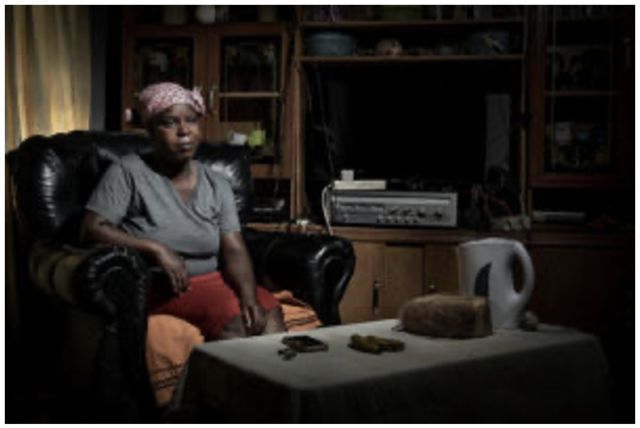
Christina Ledwaba at home in Mankweng, Limpopo. Since losing her baby, Mohau, to listeriosis, Christina has managed to give birth to a healthy baby girl. (Photo: Thom Pierce)

“I knew something was wrong the minute I saw that sonar,” she said. Doctors confirmed that the baby had no heartbeat. She then gave birth to Mohau. When the baby was delivered, the nurses merely left the umbilical cord attached. For hours she lay on the bed with her dead baby under her legs. Since then, Christina has had another baby, but when she was eight months pregnant, she experienced diarrhea and started to panic, worried that something was wrong again, but she was able to give birth to a healthy little girl. Despite good evidence that her stillborn baby’s death was linked to listeriosis, Christina still consumes Enterprise products, but she makes sure that the food is heated first.

Stephen Thokwane, 43

Stephen Thokwane is a shadow of his former self. The once fit and healthy man fell ill in December 2017. What started off as a headache and flu-like symptoms turned into a nightmare for his family.

Stephen Thokwane at his home in Steelpoort, Limpopo where he lives with his wife and four children. Once fit and healthy, Stephen contracted listeriosis and is now a shadow of his former self. (Photo: Thom Pierce)

Dumbfounded by his sudden illness, which he self-diagnosed as a stroke, the family first sought spiritual help. The family said that the prophet told the family that they needed to pray for Stephen. Stephen deteriorated and he was admitted to hospital, where he lost his eyesight, suffering severe delirium and temporary paralysis. The man, who used to jog 15 kilometers at a time, found himself having to learn how to walk again. And while he is back on his feet, his health is still not what it was. He is fatigued, and he has lost strength. Due to this, he is no longer able to continue his work as a boilermaker, something he did part-time besides his formal employment, in order to support his family. Thokwane is now working towards paying off a loan he took out to build a house for his wife and four kids. “After he got so sick, he was worried that he may die without leaving us with a roof over our heads, so he took out a loan to build this house,” his wife Maggi said.

Monthla Ngobeni, 37

Monthla Ngobeni is the first named claimant in the court papers. Her daughter Thetho, who is almost two, has undergone four operations since she was born. After contracting listeriosis in her mother’s womb, Thetho developed a condition called Hydrocephalus, a build-up of fluid in the brain. A shunt that drains the fluid has been inserted into Thetho’s head in order to manage her condition and, ultimately, save her life. She will always have a shunt and it will have to be replaced periodically as she grows.

Monthla Ngobeni with her daughter, Thetho, at home in Polokwane, Limpopo. Montlha is the first named claimant in the listeriosis class action. Thetho was born with severe health complications due to contracting listeriosis in the womb. (Photo: Thom Pierce)

The shunt has been blocked twice so far, forcing the little girl to undergo surgery to remove and replace it. Doctors have told Monthla that Thetho’s development milestones will be significantly delayed. At two, Thetho cannot speak yet. There is no certainty of what the future holds for her. Monthla has fallen into debt trying to manage both her and Thetho’s medical bills. She currently owes a hospital R26,000 for a hip replacement that she needed due to her own listeriosis infection.

Ephraim Chinula, 64

Ephraim Chinula, Riley’s grandfather, at home in Eldorado Park, Soweto. After his grandson fell ill along with nine other children from their creche, Ephraim rallied the community, and the result has been the listeriosis class action. (Photo: Thom Pierce)

Ephraim Chinula is Riley Chinula’s grandfather. Riley Chinula contracted Listeriosis alongside nine other children after eating contaminated meat at their creche in Soweto. The stools from the sick children were investigated and led to the first confirmation of the listeriosis outbreak.

Riley, who was three years old at the time, was the youngest of the kids at the creche. They all had high fevers, stomach cramps, vomiting and diarrhea. The entire group was taken to Chris Hani Baragwanath hospital, where doctors were ready to receive them.

“I got the impression that the doctors knew what they were dealing with, as they had been briefed by the local clinic, so they already suspected listeriosis.” Laboratory tests were run on the kids, and it was confirmed that the children had indeed contracted listeriosis. When the news broke, the community came together and committed themselves to seeking justice for what they viewed as negligence on the part of Tiger Brands.

Tebogo Ntjana, 31

Teddy and Tebogo Ntjana at home in Midrand, Johannesburg. They lost their second daughter to listeriosis, Tebogo and Teddy are still searching for closure. (Photo: Thom Pierce)

Tebogo became very ill in October 2017 and was taken to hospital where she later suffered a miscarriage, four months into her pregnancy. The doctors took blood samples and told her that she had contracted listeriosis. Not knowing anything about the illness, Tebogo and her husband, Teddy, searched online for it and were alarmed to discover the severity of the condition. “We googled listeria … yoh, we got scared.”

Thinking that it was a singular case, they presumed that they had done something to cause the illness. One month later, the couple heard the then minister of health, Dr Aaron Motsoaledi, announcing the listeriosis outbreak on the radio. The news came as a relief to the couple who would often buy polony and viennas from a Tiger Brands factory shop in Germiston. They have been blaming themselves for the miscarriage since it happened. “You blame yourself as if you killed your baby,” Tebogo said.

This piece of both journalism and photojournalism by Nomatter Ndebele and Thom Pierce of the Maverick Citizen.

References

Besser, J. (2020). Expert Opinion Regarding a Listeria Outbreak in South Africa Involving Tiger Brands Limited.

Coulombier, D. (2020). Expert Opinion Regarding a Listeria Outbreak in South Africa Involving Tiger Brands Limited.

Food Focus. (2017). An overview of the Listeria outbreak in South Africa (fact sheet).

Gerner-Smidt, P. (2020). Expert Opinion on Subtyping Aspects of the Listeria Outbreak in South Africa Involving Tiger Brands Limited.

NICD. (2016). Investigation of Listeria monocytogenes cases at Charlotte Maxeke Johannesburg Academic Hospital in Johannesburg, December 2016.

NICD. (2017). Investigation of Listeria monocytogenes cases identified at Tshwane academic laboratory, 1 March-30 August 2017.

NICD. (2018). The Listeria outbreak: Meeting with RSA extended stakeholders and WHO Listeriosis team (PowerPoint presentation).

Shuping, L., et al. (2015). Investigating a cluster of Listeria monocytogenes cases in the Western Cape province of South Africa, September 2015.

Smith, A. M., et al. (2016). Genome Sequences for a Cluster of Human Isolates of Listeria monocytogenes Identified in South Africa in 2015. Genome Announc. 4(2): e00200-16. doi:10.1128/genomeA.00200-16.

Smith, A. M., et al. (2019). Outbreak of Listeria monocytogenes in South Africa, 2017-2018: Laboratory Activities and Experiences Associated with Whole-Genome Sequencing Analysis of Isolates. Foodborne Pathog. Dis. 16(7): 524-530. doi:10.1089/fpd.2018.2586.

Thomas, J., et al. (2020). Outbreak of Listeriosis in South Africa Associated with Processed Meat. N. Engl. J. Med. 382: 632-643. doi:10.1056/NEJMoa1907462.

AN OUTBREAK OF E. COLI O157:H7 LINKED TO ROMAINE LETTUCE

In total, 240 people infected with the outbreak strains of E. coli O157:H7 were reported from 37 states. Illnesses started on dates ranging from March 13, 2018, to August 22, 2018. Ill people ranged in age from 1 to 93 years, with a median age of 26. Sixty-six percent of ill people were female. Of the more than 201 people with information available, 104 were hospitalized, including 28 people who developed hemolytic uremic syndrome, a type of kidney failure. Five deaths were reported from Arkansas, California, Minnesota (2), and New York.[1]

In addition to this outbreak being unusually large, case-patient clinical course was unusually severe. The proportion of case-patients developing HUS (12.7%) was twice as high as previous outbreaks of Shiga toxin-producing E. coli O157 (6.3%). There were five deaths in this outbreak (2.2%), which is almost four times higher than expected (0.6%). This could be explained by the strain’s Stx2a toxin subtype, which produces more virulent toxins than other types. Outbreaks with Stx2 toxin are more likely to result in increased rates of HUS.

WGS analysis of isolates from 184 ill people identified antibiotic resistance to chloramphenicol, streptomycin, sulfisoxazole, tetracycline, and trimethoprim-sulfamethoxazole. Standard antibiotic resistance testing of eight clinical isolates by CDC’s National Antimicrobial Resistance Monitoring System (NARMS) laboratory confirmed these findings. Isolates from four of those ill people also contained genes for resistance to ampicillin and ceftriaxone. These findings do not affect treatment guidance since antibiotics are not recommended for patients with E. coli O157 infections. Epidemiologic, laboratory, and traceback evidence indicated that romaine lettuce from the Yuma growing region was the likely source of this outbreak.

The FDA and state and local regulatory officials traced the romaine lettuce to 23 farms and 36 fields in the Yuma growing region. The FDA, along with CDC and state partners, started an environmental assessment in the Yuma growing region and collected samples of water, soil, and manure. CDC laboratory testing identified the outbreak strain of E. coli O157:H7 in water samples taken from a canal in the Yuma growing region. WGS showed that the E. coli O157:H7 found in the canal water is closely related genetically to the E. coli O157:H7 from ill people. Laboratory testing for other environmental samples is continuing. FDA is continuing to investigate to learn more about how the E. coli bacteria could have entered the water and ways this water could have contaminated romaine lettuce in the region.

Certainly, as well-cited below, leafy greens have been a source of E. coli-related illnesses for decades, and there have been concerns raised about lettuce grown in the Yuma region. The CDC reports as of May 20, 2010, a total of 26 confirmed and 7 probable cases related to an E. coli O145 outbreak have been reported from 5 states since March 1, 2010, linked to shredded romaine grown in Yuma.[2] In the FDA’s “Environmental Assessment Report in December 2010,” the authors determined:

that the R.V. park is a reasonably likely potential source of the outbreak pathogen based upon the evidence of direct drainage into the lateral irrigation canal; the moist soil in this drainage area; the multiple sewage leach systems on the property; the presence of other STEC found in the lateral irrigation canal and in the growing fields of the suspect farm; and the fact that the section of the lateral canal downstream from the R.V. park supplies water to only one other farm in addition to the suspect farm.

Two pumps are located on the main Wellton canal near the lateral canal split that supplies water to fields of the suspect farm; one gasoline powered pump on a trailer and one permanent electric pump with an attached hose. The electric pump supplies canal water to an attached open-end hose. The site is not secured from vehicles and the hose pump is also unsecured. At the time of this investigation there were people living in recreational vehicles on undeveloped land within one mile of the hose pump. The fact that this area is open to vehicles and the pump and hose are unsecured make it possible for an R.V. owner to dump and rinse out their R.V. septic system into the main Wellton canal at the lateral canal split that supplies the farm. The ground near the hose pump shows erosion evidence of drainage into the Wellton canal. Soil collected from this erosion site tested positive for other Stx2-producing STEC but did not match the outbreak strain.

In a 2009 “Survey of Selected Bacteria in Irrigation Canal Water – Third Year” written by Jorge M. Fonseca, he correctly predicted the human and industry problems that were likely to plague the Yuma lettuce growers:

Despite the fact that no Arizona lettuce grower has been involved in any contaminated-lettuce outbreak, it is of paramount importance to determine the reasons why Arizona lettuce is regarded as safe. This can help lower possibilities of any emerging problem and prevent a catastrophic damage to the industry, as it has occurred in other regions when no control was taken to reduce risks of contaminated product.

A PowerPoint done by Dr. Fonseca again illustrated the varying risks of lettuce production in Yuma. An example of a few of his points of concern:

And, then the 2018 romaine lettuce E. coli outbreak struck, sickening hundreds in the United States and Canada with dozens suffering from acute kidney failure with five reported deaths. Once again, the Wellton Irrigation Canal was the focus of attention in the “Memorandum to File on the 2018 Environmental Assessment”:

During this EA, three samples of irrigation canal water collected by the team were found to contain E. coli O157:H7 with the same rare molecular fingerprint (using whole genome sequencing (WGS)) as the strain that produced human illnesses (the outbreak strain). These samples were collected from an approximate 3.5-mile stretch of an irrigation canal in the Wellton area of Yuma County that delivers water to several of the farms identified in the traceback investigation as shipping romaine lettuce that was potentially contaminated with the outbreak strain. The outbreak strain was not identified in any of the other samples collected during this EA, although other pathogens of public health significance were detected.

Not surprisingly, the FDA in its full “Environmental Assessment of Factors Potentially Contributing to the Contamination of Romaine Lettuce Implicated in a Multi-State Outbreak of E. coli O157:H7,”[3] concluded that the risk of environmental contamination was in fact a well-known and long-standing risk:

Food safety problems related to raw whole and fresh-cut (e.g., bagged salad) leafy greens are a longstanding issue. As far back as 2004, FDA issued letters to the leafy greens industry to express concerns about continuing outbreaks associated with these commodities. FDA and our partners at CDC identified 28 foodborne illness outbreaks of Shiga-toxin producing E. coli (STEC) with a confirmed or suspected link to leafy greens in the United States between 2009 and 2017. This is a time frame that followed industry implementation of measures to address safety concerns after a large 2006 outbreak of E. coli O157:H7 caused by bagged spinach. STEC contamination of leafy greens has been identified by traceback to most likely occur in the farm environment.

Contamination occurring in the farm environment may be amplified during fresh-cut produce manufacturing/processing if appropriate preventive controls are not in place. Unlike other foodborne pathogens, STEC, including E. coli O157:H7, is not considered to be an environmental contaminant in fresh-cut produce manufacturing/processing plants.

Well-established reservoirs for E. coli O157:H7 are the intestinal tract of ruminant animals (e.g., cattle, goats, and deer) that are colonized with STEC and shed the organism in manure. Ruminant animals colonized with STEC typically have no symptoms. In contrast, human infection with E. coli O157:H7 usually produces symptomatic illness often marked by severe, often bloody, diarrhea; severe adverse health outcomes or even death can result. Humans shed E. coli O157:H7 in the stool while ill and sometimes for short periods after symptoms have gone away, but humans are not chronic carriers. Various fresh water sources, including municipal well, and recreational water, have been the source of E. coli O157:H7 infections in humans, as has contact with colonized animals at farms or petting zoos. However, most E. coli O157:H7 infections in humans occur from consuming contaminated food.

In its summary of its environmental findings (also summarized in a November 1, 2018 communication to public officials), the “FDA [in part] identified the following factors and findings as those that most likely contributed to the contamination of romaine lettuce from the Yuma growing region with E. coli O157:H7 that caused this outbreak”:

  • FDA has concluded that the water from the irrigation canal where the outbreak strain was found most likely led to contamination of the romaine lettuce consumed during this outbreak.
  • There are several ways that irrigation canal water may have come in contact with the implicated romaine lettuce including direct application to the crop and/or use of irrigation canal water to dilute crop protection chemicals applied to the lettuce crop, either through aerial or ground-based spray applications.
  • How and when the irrigation canal became contaminated with the outbreak strain is unknown. A large animal feeding operation is nearby but no obvious route for contamination from this facility to the irrigation canal was identified. Other explanations are possible although the EA team found no evidence to support them.

E. COLI AND LEAFY GREENS – A BRIEF HISTORY

E. coli outbreaks associated with lettuce, specifically the “pre-washed” and “ready-to-eat” varieties, are by no means a new phenomenon. In fact, the frequency with which this country’s fresh produce consuming public has been hit by outbreaks of pathogenic bacteria is astonishing. Here are just a sample of E. coli outbreaks based on information gathered by the Center for Science in the Public Interest, Kansas State University and the Centers for Disease Control and Prevention:

Date Vehicle Etiology Confirmed
Cases
States/Provinces
July 1995 Lettuce (leafy green; red; romaine) E. coli O157:H7 74 1:MT
Sept. 1995 Lettuce (romaine) E. coli O157:H7 20 1:ID
Sept. 1995 Lettuce (iceberg) E. coli O157:H7 30 1:ME
Oct. 1995 Lettuce (iceberg; unconfirmed) E. coli O157:H7 11 1:OH
May-June 1996 Lettuce (mesclun; red leaf) E. coli O157:H7 61 3:CT, IL, NY
May 1998 Salad E. coli O157:H7 2 1:CA
Feb.-Mar. 1999 Lettuce (iceberg) E. coli O157:H7 72 1:NE
Oct. 1999 Salad E. coli O157:H7 92 3:OR, PA, OH
Oct. 2000 Lettuce E. coli O157:H7 6 1:IN
Nov. 2001 Lettuce E. coli O157:H7 20 1:TX
July-Aug. 2002 Lettuce (romaine) E. coli O157:H7 29 2:WA, ID
Nov. 2002 Lettuce E. coli O157:H7 13 1:Il
Dec. 2002 Lettuce E. coli O157:H7 3 1:MN
Oct. 2003-May 2004 Lettuce (mixed salad) E. coli O157:H7 57 1:CA
Apr. 2004 Spinach E. coli O157:H7 16 1:CA
Nov. 2004 Lettuce E. coli O157:H7 6 1:NJ
Sept. 2005 Lettuce (romaine) E. coli O157:H7 32 3:MN, WI, OR
Sept. 2006 Spinach (baby) E. coli O157:H7 and other serotypes 205 Multistate and Canada
Nov./Dec. 2006 Lettuce E. coli O157:H7 71 4:NY, NJ, PA, DE
Nov./Dec. 2006 Lettuce E. coli O157:H7 81 3:IA, MN, WI
July 2007 Lettuce E. coli O157:H7 26 1:AL
May 2008 Romaine E. coli O157:H7 9 1:WA
Oct. 2008 Lettuce E. coli O157:H7 59 Multistate and Canada
Nov. 2008 Lettuce E. coli O157:H7 130 Canada
Sept. 2009 Lettuce: Romaine or Iceberg E. coli O157:H7 29 Multistate
Sept. 2009 Lettuce E. coli O157:H7 10 Multistate
April 2010 Romaine E. coli O145 33 5:MI, NY, OH, PA, TN
Oct. 2011 Romaine E. coli O157:H7 60 Multistate
April 2012 Romaine E. coli O157:H7 28

1:CA

Canada

June 2012 Romaine E. coli O157:H7 52 Multistate
Sept. 2012 Romaine E. coli O157:H7 9 1:PA
Oct. 2012 Spinach and Spring Mix Blend E. coli O157:H7 33 Multistate
Apr. 2013 Leafy Greens E. coli O157:H7 14 Multistate
Aug. 2013 Leafy Greens E. coli O157:H7 15 1:PA
Oct. 2013 Ready-To-Eat Salads E. coli O157:H7 33 Multistate
Apr. 2014 Romaine E. coli O126 4 1:MN
Apr. 2015 Leafy Greens E. coli O145 7 3:MD, SC, VA
June 2016 Mesclun Mix E. coli O157:H7 11 3:IL, MI, WI
Nov. 2017 Leafy Greens E. coli O157:H7 67 Multistate and Canada

THE E. COLI O157:H7 BACTERIA

Sources, Characteristics and Identification

E. coli is an archetypal commensal bacterial species that lives in mammalian intestines. E. coli O157:H7 is one of thousands of serotypes Escherichia coli.[4] The combination of letters and numbers in the name of the E. coli O157:H7 refers to the specific antigens (proteins which provoke an antibody response) found on the body and tail or flagellum[5]respectively and distinguish it from other types of E. coli.[6] Most serotypes of E. coli are harmless and live as normal flora in the intestines of healthy humans and animals.[7] The E. coli bacterium is among the most extensively studied microorganism.[8] The testing done to distinguish E. coli O157:H7 from its other E. coli counterparts is called serotyping.[9] Pulsed-field gel electrophoresis (PFGE),[10] sometimes also referred to as genetic fingerprinting, is used to compare E. coli O157:H7 isolates to determine if the strains are distinguishable.[11] A technique called multilocus variable number of tandem repeats analysis (MLVA) is used to determine precise classification when it is difficult to differentiate between isolates with indistinguishable or very similar PFGE patterns.[12]

E. coli O157:H7 was first recognized as a pathogen in 1982 during an investigation into an outbreak of hemorrhagic colitis[13] associated with consumption of hamburgers from a fast food chain restaurant.[14] Retrospective examination of more than three thousand E. coli cultures obtained between 1973 and 1982 found only one (1) isolationwith serotype O157:H7, and that was a case in 1975.[15] In the ten (10) years that followed there were approximately thirty (30) outbreaks recorded in the United States.[16] This number is likely misleading, however, because E. coliO157:H7 infections did not become a reportable disease in any state until 1987 when Washington became the first state to mandate its reporting to public health authorities.[17] As a result, only the most geographically concentrated outbreak would have garnered enough notice to prompt further investigation.[18]

The E. coli O157:H7 Bacteria

E. coli O157:H7’s ability to induce injury in humans is a result of its ability to produce numerous virulence factors, most notably Shiga-like toxins.[19] Shiga toxin (Stx) has multiple variants (e.g. Stx1, Stx2, Stx2c), and acts like the plant toxin ricin by inhibiting protein synthesis in endothelial and other cells.[20] Shiga toxin is one of the most potent toxins known.[21] In addition to Shiga toxins, E. coli O157:H7 produces numerous other putative virulence factors including proteins, which aid in the attachment and colonization of the bacteria in the intestinal wall and which can lyse red blood cells and liberate iron to help support E. coli metabolism.[22]

E. coli O157:H7 evolved from enteropathogenic E. coli serotype O55:H7, a cause of non-bloody diarrhea, through the sequential acquisition of phage-encoded Stx2, a large virulence plasmid, and additional chromosomal mutations.[23]The rate of genetic mutation of E. coli O157:H7 indicates that the common ancestor of current E. coli O157:H7 clades[24] likely existed some 20,000 years ago.[25] E. coli O157:H7 is a relentlessly evolving organism,[26] constantly mutating and acquiring new characteristics, including virulence factors that make the emergence of more dangerous variants a constant threat.[27] The CDC has emphasized the prospect of emerging pathogens as a significant public health threat for some time.[28]

Although foods of a bovine origin are the most common cause of both outbreaks and sporadic cases of E. coliO157:H7 infections[29], outbreak of illnesses have been linked to a wide variety of food items. For example, produce has, since at least 1991, been the source of substantial numbers of outbreak-related E. coli O157:H7 infections.[30] Other unusual vehicles for E. coli O157:H7 outbreaks have included unpasteurized juices, yogurt, dried salami, mayonnaise, raw milk, game meats, sprouts, and raw cookie dough.[31]

According to a recent study, an estimated 93,094 illnesses are due to domestically acquired E. coli O157:H7 each year in the United States.[32] Estimates of foodborne acquired O157:H7 cases result in 2,138 hospitalizations and 20 deaths annually.[33] The colitis caused by E. coli O157:H7 is characterized by severe abdominal cramps, diarrhea that typically turns bloody within twenty-four (24) hours, and sometimes fevers.[34] The incubation period—which is to say the time from exposure to the onset of symptoms—in outbreaks is usually reported as three (3) to four (4) days, but may be as short as one (1) day or as long as ten (10) days.[35] Infection can occur in people of all ages but is most common in children.[36] The duration of an uncomplicated illness can range from one (1) to twelve (12) days.[37] In reported outbreaks, the rate of death is 0-2%, with rates running as high as 16-35% in outbreaks involving the elderly, like those have occurred at nursing homes.[38]

What makes E. coli O157:H7 remarkably dangerous is its very low infectious dose,[39] and how relatively difficult it is to kill these bacteria.[40] Unlike Salmonella, for example, which usually requires something approximating an “egregious food handling error, E. coli O157:H7 in ground beef that is only slightly undercooked can result in infection,”[41] as few as twenty (20) organisms may be sufficient to infect a person and, as a result, possibly kill them.[42] And unlike generic E. coli, the O157:H7 serotype multiplies at temperatures up to 44°F, survives freezing and thawing, is heat resistant, grows at temperatures up to 111°F, resists drying, and can survive exposure to acidic environments.[43]

And, finally, to make it even more of a threat, E. coli O157:H7 bacteria are easily transmitted by person-to-person contact.[44] There is also the serious risk of cross-contamination between raw meat and other food items intended to be eaten without cooking. Indeed, a principle and consistent criticism of the USDA E. coli O157:H7 policy is the fact that it has failed to focus on the risks of cross-contamination versus that posed by so-called improper cooking.[45] With this pathogen, there is ultimately no margin of error. It is for this precise reason that the USDA has repeatedly rejected calls from the meat industry to hold consumers primarily responsible for E. coli O157:H7 infections caused, in part, by mistakes in food handling or cooking.[46]

Hemolytic Uremic Syndrome (HUS)

E. coli O157:H7 infections can lead to a severe, life-threatening complication called hemolytic uremic syndrome (HUS).[47] HUS accounts for the majority of the acute deaths and chronic injuries caused by the bacteria.[48] HUS occurs in 2-7% of victims, primarily children, with onset five to ten days after diarrhea begins.[49] It is the most common cause of renal failure in children.[50] Approximately half of the children who suffer HUS require dialysis, and at least 5% of those who survive have long term renal impairment.[51] The same number suffers severe brain damage.[52] While somewhat rare, serious injury to the pancreas, resulting in death or the development of diabetes, can also occur.[53] There is no cure or effective treatment for HUS.[54]

HUS is believed to develop when the toxin from the bacteria, known as Shiga-like toxin (SLT), enters the circulation through the inflamed bowel wall.[55] SLT, and most likely other chemical mediators, attach to receptors on the inside surface of blood vessel cells (endothelial cells) and initiate a chemical cascade that results in the formation of tiny thrombi (blood clots) within these vessels.[56] Some organs seem more susceptible, perhaps due to the presence of increased numbers of receptors, and include the kidney, pancreas, and brain.[57]  By definition, when fully expressed, HUS presents with the triad of hemolytic anemia (destruction of red blood cells), thrombocytopenia (low platelet count), and renal failure (loss of kidney function).[58]

As already noted, there is no known therapy to halt the progression of HUS. HUS is a frightening complication that even in the best American centers has a notable mortality rate.[59] Among survivors, at least five percent will suffer end stage renal disease (ESRD) with the resultant need for dialysis or transplantation.[60] But, “[b]ecause renal failure can progress slowly over decades, the eventual incidence of ESRD cannot yet be determined.”[61] Other long-term problems include the risk for hypertension, proteinuria (abnormal amounts of protein in the urine that can portend a decline in renal function), and reduced kidney filtration rate.[62] Since the longest available follow-up studies of HUS victims are 25 years, an accurate lifetime prognosis is not really available and remains controversial.[63] All that can be said for certain is that HUS causes permanent injury, including loss of kidney function, and it requires a lifetime of close medical-monitoring.

Other Medical Complications

Reactive Arthritis

The term reactive arthritis refers to an inflammation of one or more joints, following an infection localized at another site distant from the affected joints. The predominant site of the infection is the gastrointestinal tract. Several bacteria, including E. coli, induce septic arthritis.[64]The resulting joint pain and inflammation can resolve completely over time or permanent joint damage can occur.[65]

The reactive arthritis associated with Reiter Syndrome may develop after a person eats food that has been tainted with bacteria. In a small number of persons, the joint inflammation is accompanied by conjunctivitis (inflammation of the eyes), and urethritis (painful urination). Id. This triad of symptoms is called Reiter Syndrome.[66] Reiter Syndrome, a form of reactive arthritis, is an uncommon but debilitating syndrome caused by gastrointestinal or genitourinary infections. The most common gastrointestinal bacteria involved are Salmonella, Campylobacter, Yersinia, and Shigella. Reiter Syndrome is characterized by a triad of arthritis, conjunctivitis, and urethritis, although not all three symptoms occur in all affected individuals.[67]

Although the initial infection may not be recognized, reactive arthritis can still occur. Reactive arthritis typically involves inflammation of one joint (monoarthritis) or four or fewer joints (oligoarthritis), preferentially affecting those of the lower extremities; the pattern of joint involvement is usually asymmetric. Inflammation is common at entheses – i.e., the places where ligaments and tendons attach to bone, especially the knee and the ankle.

Salmonella has been the most frequently studied bacteria associated with reactive arthritis. Overall, studies have found rates of Salmonella-associated reactive arthritis to vary between 6 and 30%.[68] The frequency of postinfectious Reiter Syndrome, however, has not been well described. In a Washington State study, while 29% developed arthritis, only 3% developed the triad of symptoms associated with Reiter Syndrome.[69] In addition, individuals of Caucasian descent may be more likely those of Asian descent to develop reactive arthritis,[70] and children may be less susceptible than adults to reactive arthritis following infection with Salmonella.[71]

A clear association has been made between reactive arthritis and a genetic factor called the human leukocyte antigen (HLA) B27 genotype. HLA is the major histocompatibility complex in humans; these are proteins present on the surface of all body cells that contain a nucleus and are in especially high concentrations in white blood cells (leukocytes). It is thought that HLA-B27 may affect the elimination of the infecting bacteria or an individual’s immune response.[72]HLA-B27 has been shown to be a predisposing factor in one-half to over two-thirds of individuals with reactive arthritis.[73] While HLA-B27 does not appear to predispose to the initial infection itself, it increases the risk of developing arthritis that is more likely to be severe and prolonged. This risk may be slightly greater for Salmonella and Yersinia-associated arthritis than with Campylobacter, but more research is required to clarify this.[74]

Irritable Bowel Syndrome

A recently published study surveyed the extant scientific literature and noted that post-infectious irritable bowel syndrome (PI-IBS) is a common clinical phenomenon first-described over five decades ago.[75] The Walkerton Health Study further notes that:

Between 5% and 30% of patients who suffer an acute episode of infectious gastroenteritis develop chronic gastrointestinal symptoms despite clearance of the inciting pathogens.[76]

In terms of its own data, the “study confirm[ed] a strong and significant relationship between acute enteric infection and subsequent IBS symptoms.”[77] The WHS also identified risk-factors for subsequent IBS, including younger age; female sex; and four features of the acute enteric illness – diarrhea for > 7days, presence of blood in stools, abdominal cramps, and weight loss of at least ten pounds.[78]

Irritable bowel syndrome (IBS) is a chronic disorder characterized by alternating bouts of constipation and diarrhea, both of which are generally accompanied by abdominal cramping and pain.[79] In one recent study, over one-third of IBS sufferers had had IBS for more than ten years, with their symptoms remaining constant over time.[80] IBS sufferers typically experienced symptoms for an average of 8.1 days per month.[81]

As would be expected from a chronic disorder with symptoms of such persistence, IBS sufferers required more time off work, spent more days in bed, and more often cut down on usual activities, when compared with non-IBS sufferers.[82] And even when able to work, a significant majority (67%), felt less productive at work because of their symptoms.[83] IBS symptoms also have a significantly deleterious impact on social well-being and daily social activities, such as undertaking a long drive, going to a restaurant, or taking a vacation.[84] Finally, although a patient’s psychological state may influence the way in which he or she copes with illness and responds to treatment, there is no evidence that supports the theory that psychological disturbances in fact cause IBS or its symptoms.[85]

___________________

[1]           Lyndsay Bottichio, et al., Shiga Toxin-Producing E. coli Infections Associated with Romaine Lettuce – United States, 2018, Clinical Infectious Diseases (December 9, 2019), https://academic.oup.com/cid/advance-article/doi/10.1093/cid/ciz1182/5669965.

[2]           https://www.cdc.gov/ecoli/2010/shredded-romaine-5-21-10.html

[3]           https://www.fda.gov/Food/RecallsOutbreaksEmergencies/Outbreaks/ucm624546.htm

[4]           E. coli bacteria were discovered in the human colon in 1885 by German bacteriologist Theodor Escherich. Feng, Peter, Stephen D. Weagant, Michael A. Grant, Enumeration of Escherichia coli and the Coliform Bacteria, in BACTERIOLOGICAL ANALYTICAL MANUAL (8th Ed. 2002), http://www.cfsan.fda.gov/~ebam/bam-4.html. Dr. Escherich also showed that certain strains of the bacteria were responsible for infant diarrhea and gastroenteritis, an important public health discovery. Id. Although the bacteria were initially called Bacterium coli, the name was later changed to Escherichia coli to honor its discoverer. Id.

[5]           Not all E. coli are motile. For example, E. coli O157:H7 which lack flagella are thus E. coli O157:NM for non-motile.

[6]           CDC, Escherichia coli O157:H7, General Information, Frequently Asked Questions: What is Escherichia coli O157:H7?, http://www.cdc.gov/ncidod/dbmd/diseaseinfo/escherichiacoli_g.htm.

[7]           Marion Nestle, Safe Food:  Bacteria, Biotechnology, and Bioterrorism, 40-41 (1st Pub. Ed. 2004).

[8]           James M. Jay, MODERN FOOD MICROBIOLOGY at 21 (6th ed. 2000). (“This is clearly the most widely studied genus of all bacteria.”)

[9]           Beth B. Bell, MD, MPH, et al. A Multistate Outbreak of Escherichia coli O157:H7-Associated Bloody Diarrhea and Hemolytic Uremic Syndrome from Hamburgers:  The Washington Experience, 272 JAMA (No. 17) 1349, 1350 (Nov. 2, 1994) (describing the multiple step testing process used to confirm, during a 1993 outbreak, that the implicated bacteria were E. coli O157:H7).

[10]         Jay, supra note 5, at 220-21 (describing in brief the PFGE testing process).

[11]         Id. Through PFGE testing, isolates obtained from the stool cultures of probable outbreak cases can be compared to the genetic fingerprint of the outbreak strain, confirming that the person was in fact part of the outbreak. Bell, supra note 6, at 1351-52. Because PFGE testing soon proved to be such a powerful outbreak investigation tool, PulseNet, a national database of PFGE test results was created. Bala Swaminathan, et al. PulseNet:  The Molecular Subtyping Network for Foodborne Bacterial Disease Surveillance, United States, 7 Emerging Infect. Dis. (No. 3) 382, 382-89 (May-June 2001) (recounting the history of PulseNet and its effectiveness in outbreak investigation).

[12]         Konno T. et al. Application of a multilocus variable number of tandem repeats analysis to regional outbreak surveillance of Enterohemorrhagic Escherichia coli O157:H7 infections. Jpn J Infect Dis. 2011 Jan; 64(1): 63-5.

[13]         “[A] type of gastroenteritis in which certain strains of the bacterium Escherichia coli (E. coli) infect the large intestine and produce a toxin that causes bloody diarrhea and other serious complications.”  The Merck Manual of Medical Information, 2nd Home Ed. Online, http://www.merck.com/mmhe/sec09/ch122/ch122b.html.

[14]         L. Riley, et al. Hemorrhagic Colitis Associated with a Rare Escherichia coli Serotype, 308 New. Eng. J. Med. 681, 684-85 (1983) (describing investigation of two outbreaks affecting at least 47 people in Oregon and Michigan both linked to apparently undercooked ground beef). Chinyu Su, MD & Lawrence J. Brandt, MD, Escherichia coli O157:H7 Infection in Humans, 123 Annals Intern. Med. (Issue 9), 698-707 (describing the epidemiology of the bacteria, including an account of its initial discovery).

[15]         Riley, supra note 11 at 684. See also Patricia M. Griffin & Robert V. Tauxe, The Epidemiology of Infections Caused by Escherichia coliO157:H7, Other Enterohemorrhagic E. coli, and the Associated Hemolytic Uremic Syndrome, 13 Epidemiologic Reviews 60, 73 (1991).

[16]         Peter Feng, Escherichia coli Serotype O157:H7:  Novel Vehicles of Infection and Emergence of Phenotypic Variants, 1 Emerging Infect. Dis. (No. 2), 47, 47 (April-June 1995) (noting that, despite these earlier outbreaks, the bacteria did not receive any considerable attention until ten years later when an outbreak occurred 1993 that involved four deaths and over 700 persons infected).

[17]         William E. Keene, et al. A Swimming-Associated Outbreak of Hemorrhagic Colitis Caused by Escherichia coli O157:H7 and Shigella Sonnei, 331 New Eng. J. Med. 579 (Sept. 1, 1994). See also Stephen M. Ostroff, MD, John M. Kobayashi, MD, MPH, and Jay H. Lewis, Infections with Escherichia coli O157:H7 in Washington State:  The First Year of Statewide Disease Surveillance, 262 JAMA (No. 3) 355, 355 (July 21, 1989). (“It was anticipated the reporting requirement would stimulate practitioners and laboratories to screen for the organism.”)

[18]         See Keene, supra note 14 at 583. (“With cases scattered over four counties, the outbreak would probably have gone unnoticed had the cases not been routinely reported to public health agencies and investigated by them.”)  With improved surveillance, mandatory reporting in 48 states, and the broad recognition by public health officials that E. coli O157:H7 was an important and threatening pathogen, there were a total of 350 reported outbreaks from 1982-2002. Josef M. Rangel, et al. Epidemiology of Escherichia coli O157:H7 Outbreaks, United States, 1982-2002, 11 Emerging Infect. Dis. (No. 4) 603, 604 (April 2005).

[19]         Griffin & Tauxe, supra note 12, at 61-62 (noting that the nomenclature came about because of the resemblance to toxins produced by Shigella dysenteries).

[20]         Sanding K, Pathways followed by ricin and Shiga toxin into cells, Histochemistry and Cell Biology, vol. 117, no. 2:131-141 (2002). Endothelial cells line the interior surface of blood vessels. They are known to be extremely sensitive to E. coli O157:H7, which is cytotoxigenic to these cells making them a primary target during STEC infections.

[21]         Johannes L, Shiga toxins—from cell biology to biomedical applications. Nat Rev Microbiol 8, 105-116 (February 2010). Suh JK, et al.Shiga Toxin Attacks Bacterial Ribosomes as Effectively as Eucaryotic Ribosomes, Biochemistry, 37 (26); 9394–9398 (1998).

[22]         Welinder-Olsson C, Kaijser B. Enterohemorrhagic Escherichia coli (EHEC). Scand J. Infect Dis. 37(6-7): 405-16 (2005). See also USDA Food Safety Research Information Office E. coli O157:H7 Technical Fact Sheet:  Role of 60-Megadalton Plasmid (p0157) and Potential Virulence Factors, http://fsrio.nal.usda.gov/document_fsheet.php?product_id=225.

[23]         Kaper JB and Karmali MA. The Continuing Evolution of a Bacterial Pathogen. PNAS vol. 105 no. 12 4535-4536 (March 2008). Wick LM, et al. Evolution of genomic content in the stepwise emergence of Escherichia coli O157:H7. J Bacteriol 187:1783–1791(2005).

[24]         A group of biological taxa (as species) that includes all descendants of one common ancestor.

[25]         Zhang W, et al. Probing genomic diversity and evolution of Escherichia coli O157 by single nucleotide polymorphisms. Genome Res 16:757–767 (2006).

[26]         Robins-Browne RM. The relentless evolution of pathogenic Escherichia coli. Clin Infec Dis. 41:793–794 (2005).

[27]         Manning SD, et al. Variation in virulence among clades of Escherichia coli O157:H7 associated with disease outbreaks. PNAS vol. 105 no. 12 4868-4873 (2008). (“These results support the hypothesis that the clade 8 lineage has recently acquired novel factors that contribute to enhanced virulence. Evolutionary changes in the clade 8 subpopulation could explain its emergence in several recent foodborne outbreaks; however, it is not clear why this virulent subpopulation is increasing in prevalence.”)

[28]         Robert A. Tauxe, Emerging Foodborne Diseases: An Evolving Public Health Challenge, 3 Emerging Infect. Dis. (No. 4) 425, 427 (Oct.-Dec. 1997). (“After 15 years of research, we know a great deal about infections with E. coli O157:H7, but we still do not know how best to treat the infection, nor how the cattle (the principal source of infection for humans) themselves become infected.”)

[29]         CDC, Multistate Outbreak of Escherichia coli O157:H7 Infections Associated With Eating Ground Beef—United States, June-July 2002, 51 MMWR 637, 638 (2002) reprinted in 288 JAMA (No. 6) 690 (Aug. 14, 2002).

[30]         Rangel, supra note 15, at 605.

[31]         Feng, supra note 13, at 49. See also USDA Bad Bug Book, Escherichia coli O157:H7, http://www.fda.gov/food/foodsafety/foodborneillness/foodborneillnessfoodbornepathogensnaturaltoxins/badbugbook/ucm071284.htm.

[32]         Scallan E, et al. Foodborne illness acquired in the United States –major pathogens, Emerging Infect. Dis. Jan. (2011), http://www.cdc.gov/EID/content/17/1/7.htm.

[33]         Id., Table 3.

[34]         Griffin & Tauxe, supra note 12, at 63.

[35]         Centers for Disease Control, Division of Foodborne, Bacterial and Mycotic Diseases, Escherichia coli general information, http://www.cdc.gov/nczved/dfbmd/disease_listing/stec_gi.html. See also PROCEDURES TO INVESTIGATE FOODBORNE ILLNESS, 107 (IAFP 5th Ed. 1999) (identifying incubation period for E. coli O157:H7 as “1 to 10 days, typically 2 to 5”).

[36]         Su & Brandt, supra note 11 (“the young are most often affected”).

[37]         Tauxe, supra note 25, at 1152.

[38]         Id.

[39]         Griffin & Tauxe, supra note 12, at 72. (“The general patterns of transmission in these outbreaks suggest that the infectious dose is low.”)

[40]         V.K. Juneja, O.P. Snyder, A.C. Williams, and B.S. Marmer, Thermal Destruction of Escherichia coli O157:H7 in Hamburger, 60 J. Food Prot. (vol. 10). 1163-1166 (1997) (demonstrating that, if hamburger does not get to 130°F, there is no bacterial destruction, and at 140°F, there is only a 2-log reduction of E. coli present).

[41]         Griffin & Tauxe, supra note 12, at 72 (noting that, as a result, “fewer bacteria are needed to cause illness that for outbreaks of salmonellosis”). Nestle, supra note 4, at 41. (“Foods containing E. coli O17:H7 must be at temperatures high enough to kill all of them.”) (italics in original)

[42]         Patricia M. Griffin, et al.  Large Outbreak of Escherichia coli O157:H7 Infections in the Western United States:  The Big Picture, in RECENT ADVANCES IN VEROCYTOTOXIN-PRODUCING ESCHERICHIA COLI INFECTIONS, at 7 (M.A. Karmali & A. G. Goglio eds. 1994). (“The most probable number of E. coli O157:H7 was less than 20 organisms per gram.”)  There is some inconsistency with regard to the reported infectious dose. Compare Chryssa V. Deliganis, Death by Apple Juice:  The Problem of Foodborne Illness, the Regulatory Response, and Further Suggestions for Reform, 53 Food Drug L.J. 681, 683 (1998) (“as few as ten”) with Nestle, supra note 4, at 41 (“less than 50”). Regardless of these inconsistencies, everyone agrees that the infectious dose is, as Dr. Nestle has put it, “a miniscule number in bacterial terms.”  Id.

[43]         Nestle, supra note 4, at 41.

[44]         Griffin & Tauxe, supra note 12, at 72. The apparent “ease of person-to-person transmission…is reminiscent of Shigella, an organism that can be transmitted by exposure to extremely few organisms.”  Id. As a result, outbreaks in places like daycare centers have proven relatively common. Rangel, supra note 15, at 605-06 (finding that 80% of the 50 reported person-to-person outbreak from 1982-2002 occurred in daycare centers).

[45]         See, e.g. National Academy of Science, Escherichia coli O157:H7 in Ground Beef: Review of a Draft Risk Assessment, Executive Summary, at 7 (noting that the lack of data concerning the impact of cross-contamination of E. coli O157:H7 during food preparation was a flaw in the Agency’s risk-assessment), http://www.nap.edu/books/0309086272/html/.

[46]         Kriefall v. Excel, 265 Wis.2d 476, 506, 665 N.W.2d 417, 433 (2003). (“Given the realities of what it saw as consumers’ food-handling patterns, the [USDA] bored in on the only effective way to reduce or eliminate food-borne illness”—i.e., making sure that “the pathogen had not been present on the raw product in the first place.”)  (citing Pathogen Reduction, 61 Fed. Reg. at 38966).

[47]         Griffin & Tauxe, supra note 12, at 65-68. See also Josefa M. Rangel, et al. Epidemiology of Escherichia coli O157:H7 Outbreaks, United States, 1982-2002, 11 Emerging Infect. Dis. (No. 4) 603 (April 2005) (noting that HUS is characterized by the diagnostic triad of hemolytic anemia—destruction of red blood cells, thrombocytopenia—low platelet count, and renal injury—destruction of nephrons often leading to kidney failure).

[48]         Richard L. Siegler, MD, The Hemolytic Uremic Syndrome, 42 Ped. Nephrology, 1505 (Dec. 1995) (noting that the diagnostic triad of hemolytic anemia, thrombocytopenia, and acute renal failure was first described in 1955). (“[HUS] is now recognized as the most frequent cause of acute renal failure in infants and young children.”)  See also Beth P. Bell, MD, MPH, et al. Predictors of Hemolytic Uremic Syndrome in Children During a Large Outbreak of Escherichia coli O157:H7 Infections, 100 Pediatrics 1, 1 (July 1, 1997), at http://www.pediatrics.org/cgi/content/full/100/1/e12.

[49]         Tauxe, supra note 25, at 1152. See also Nasia Safdar, MD, et al. Risk of Hemolytic Uremic Syndrome After Treatment of Escherichia coliO157:H7 Enteritis: A Meta-analysis, 288 JAMA (No. 8) 996, 996 (Aug. 28, 2002). (“E. coli serotype O157:H7 infection has been recognized as the most common cause of HUS in the United States, with 6% of patients developing HUS within 2 to 14 days of onset of diarrhea.”). Amit X. Garg, MD, MA, et al. Long-term Renal Prognosis of Diarrhea-Associated Hemolytic Uremic Syndrome: A Systematic Review, Meta-Analysis, and Meta-regression, 290 JAMA (No. 10) 1360, 1360 (Sept. 10, 2003). (“Ninety percent of childhood cases of HUS are…due to Shiga-toxin producing Escherichia coli.”)

[50]         Su & Brandt, supra note 11.

[51]         Safdar, supra note 46, at 996 (going on to conclude that administration of antibiotics to children with E. coli O157:H7 appeared to put them at higher risk for developing HUS).

[52]         Richard L. Siegler, MD, Postdiarrheal Shiga Toxin-Mediated Hemolytic Uremic Syndrome, 290 JAMA (No. 10) 1379, 1379 (Sept. 10, 2003).

[53]         Pierre Robitaille, et al., Pancreatic Injury in the Hemolytic Uremic Syndrome, 11 Pediatric Nephrology 631, 632 (1997) (“although mild pancreas involvement in the acute phase of HUS can be frequent”).

[54]         Safdar, supra note 46, at 996. See also Siegler, supra note 49, at 1379. (“There are no treatments of proven value, and care during the acute phase of the illness, which is merely supportive, has not changed substantially during the past 30 years.”)

[55]         Garg, supra note 46, at 1360.

[56]         Id. Siegler, supra note 45, at 1509-11 (describing what Dr. Siegler refers to as the “pathogenic cascade” that results in the progression from colitis to HUS).

[57]         Garg, supra note 46, at 1360. See also Su & Brandt, supra note 11, at 700.

[58]         Garg, supra note46, at 1360. See also Su & Brandt, supra note 11, at 700.

[59]         Siegler, supra note 45, at 1519 (noting that in a “20-year Utah-based population study, 5% dies, and an equal number of survivors were left with end-stage renal disease (ESRD) or chronic brain damage.”)

[60]         Garg, supra note 46, at 1366-67.

[61]         Siegler, supra note 45, at 1519.

[62]         Id. at 1519-20. See also Garg, supra note 46, at 1366-67.

[63]         Garg, supra note 46, at 1368.

[64]         See J. Lindsey, “Chronic Sequellae of Foodborne Disease,” Emerging Infectious Diseases, Vol. 3, No. 4, Oct-Dec, 1997.

[65]         Id.

[66]         Id. See also Dworkin, et al., “Reactive Arthritis and Reiter’s Syndrome following an outbreak of gastroenteritis caused by Salmonella enteritidis,” Clin. Infect. Dis., 2001 Oct. 1;33(7): 1010-14; Barth, W. and Segal, K., “Reactive Arthritis (Reiter’s Syndrome),” American Family Physician, Aug. 1999, online at www.aafp.org/afp/990800ap/ 499.html.

[67]         Hill Gaston JS, Lillicrap MS. (2003). Arthritis associated with enteric infection. Best Practices & Research Clinical Rheumatology. 17(2):219-39.

[68]         Id.

[69]         Dworkin MS, Shoemaker PC, Goldoft MJ, Kobayashi JM, “Reactive arthritis and Reiter’s syndrome following an outbreak of gastroenteritis caused by Salmonella enteritidis. Clin. Infect. Dis. 33(7):1010-14.

[70]         McColl GJ, Diviney MB, Holdsworth RF, McNair PD, Carnie J, Hart W, McCluskey J, “HLA-B27 expression and reactive arthritis susceptibility in two patient cohorts infected with Salmonella Typhimurium,”  Australian and New Zealand Journal of Medicine 30(1):28-32 (2001).

[71]         Rudwaleit M, Richter S, Braun J, Sieper J, “Low incidence of reactive arthritis in children following a Salmonella outbreak,” Annals of the Rheumatic Diseases. 60(11):1055-57 (2001).

[72]         Hill Gaston and Lillicrap, supra Note 7.

[73]         Id.; Barth WF, Segal K., “Reactive arthritis (Reiter’s syndrome),” American Family Physician, 60(2):499-503, 507 (1999).

[74]         Hill Gaston and Lillicrap, supra Note 7.

[75]         J. Marshall, et al., Incidence and Epidemiology of Irritable Bowel Syndrome After a Large Waterborne Outbreak of Bacterial Dysentery, Gastro., 2006; 131; 445-50 (hereinafter “Walkerton Health Study” or “WHS”). The WHS followed one of the largest E. coli O157:H7 outbreaks in the history of North America. Contaminated drinking water caused over 2,300 people to be infected with E. coli O157:H7, resulting in 27 recognized cases of HUS, and 7 deaths. Id. at 445. The WHS followed 2,069 eligible study participants. Id. For Salmonella specific references, see Smith, J.L., Bayles, D.O., Post-Infectious Irritable Bowel Syndrome: A Long-Term Consequence of Bacterial Gastroenteritis, Journal of Food Protection. 2007:70(7);1762-69.

[76]         Id. at 445 (citing multiple sources).

[77]         WHS, supra note 34, at 449.

[78]         Id. at 447.

[79]         A.P.S. Hungin, et al., Irritable Bowel Syndrome in the United States: Prevalence, Symptom Patterns and Impact, Aliment Pharmacol. Ther. 2005:21 (11); 1365-75.

[80]         Id.at 1367.

[81]         Id.

[82]         Id. at 1368.

[83]         Id.

[84]         Id.

[85]         Amy Foxx-Orenstein, DO, FACG, FACP, IBS—Review and What’s New, General Medicine 2006:8(3) (Medscape 2006) (collecting and citing studies). Indeed, PI-IBS has been found to be characterized by more diarrhea but less psychiatric illness with regard to its pathogenesis. SeeNicholas J. Talley, MD, PhD, Irritable Bowel Syndrome: From Epidemiology to Treatment, from American College of Gastroenterology 68th Annual Scientific Meeting and Postgraduate Course (Medscape 2003).

The Montgomery County Office of Public Health (OPH) announced today the temporary closure of Gino’s Ristorante & Pizzeria in West Norriton in relation to a Hepatitis A Virus (HAV) outbreak in the county. The restaurant will be closed until further notice while the investigation continues.

At this time, 11 total cases are under investigation, with 9 confirmed cases of Hepatitis A and 2 potential cases of Hepatitis A. Of the 9 confirmed cases, 7 people were hospitalized. To date, one death is confirmed and one additional death is under investigation.

Authorities believe the outbreak began in late November, and current data suggests that the outbreak “no longer presents a risk.” However, officials are continuing to look into the situation. Per standard public health protocols, OPH coordinated with the Pennsylvania Department of Health to issue a health advisory on Wednesday. As a result, OPH continues to receive additional information to support its investigation and identify additional potential cases. Investigation conducted to date suggests the exposure occurred in late November no longer presents a risk. However, additional investigation into probable cases resulting from the health advisory associated with this outbreak are underway. In the interest of public health, the restaurant has been shut down until further notice.

Hepatitis A is a highly contagious liver infection. The virus is generally spread when people come into trace amounts of stool from an infected person through food, drink or an object. The disease can also be spread through close contact. It can be prevented by vaccination.

Symptoms include:

• Yellow skin or eyes
• Not wanting to eat
• Upset stomach
• Throwing up
• Stomach pain
• Fever
• Dark urine or light-colored stools
• Diarrhea
• Joint pain
• Feeling tired

History of Inspectionshttps://pa.healthinspections.us/montgomery/#facility

Salmonella – Onions

As of November 12, 2021, 892 people infected with the outbreak strain of Salmonella Oranienburg have been reported from 38 states and Puerto Rico. Illnesses started on dates ranging from May 31, 2021, to October 25, 2021.

Sick people range in age from less than 1 year to 101 years, with a median age of 37, and 58% are female. Of 571 people with information available, 183 (32%) have been hospitalized.

CDC and FDA recommend that you not eat, sell, or serve fresh whole red, white, or yellow onions distributed by ProSource Produce LLC or Keeler Family Farms that were imported from the State of Chihuahua, Mexico.

Listeria – Dole Salad

As of December 17, 2021, 16 people infected with the outbreak strain of Listeria monocytogenes have been reported from 13 states. Illnesses started on dates ranging from August 16, 2014, to October 17, 2021.

Sick people range in age from 50 to 94 years, with a median age of 76, and 81% are female. Of 14 people with information available, 12 have been hospitalized. Two deaths have been reported from Michigan and Wisconsin.

On December 22, 2021, Dole recalled all Dole-branded and private label packaged salads processed at the two facilities that produced the contaminated packaged salads.

Do not to eat, sell, or serve any recalled products. Investigators are working to determine if additional products may be contaminated.

Listeria – Fresh Express

As of December 21, 10 people infected with the outbreak strain of Listeria monocytogenes have been reported from eight states. Illnesses started on dates ranging from July 26, 2016 through October 19, 2021.

Sick people range in age from 44 to 95 years, with a median age of 80, and 60% are female. All 10 people have been hospitalized. One death has been reported from Pennsylvania.

On December 20, 2021, Fresh Express recalled packaged salads produced at its facility in Streamwood, Illinois, since November 20, 2021. Do not eat, sell, or serve recalled salads. CDC and FDA are working to determine if additional products are contaminated.

E. coli – Simple Truth and Nature’s Basket Power Greens

As of January 6, 2022, a total of 10 people infected with the outbreak strain of E. coli O157:H7 have been reported from four states. Illnesses started on dates ranging from November 27, 2021, to December 9, 2021.

Sick people range in age from 26 to 79 years, with a median age of 59, and 100% are female. Of ten people with information available, four have been hospitalized and one person developed a type of kidney failure called hemolytic uremic syndrome (HUS). No deaths have been reported.

State and local public health officials interviewed people about the foods they ate in the week before they got sick. Nine people reported eating Organic Power Greens sold under the Simple Truth Organic brand (8) and the Nature’s Basket brand (1), and seven people’s shopper records showed the purchase of these products. Both brands of Organic Power Greens have the same mix of leafy greens: organic spinach, mizuna, kale, and chard.

E. coli – Josie’s Organics Baby Spinach

A total of 15 people infected with the outbreak strain of E. coli O157:H7 were reported from 10 states. The true number of sick people in this outbreak was likely much higher than the number reported, and this outbreak may not be limited to the states with known illnesses. This is because many people recover without medical care and are not tested for E. coli.

Illnesses started on dates ranging from October 13, 2021, to November 8, 2021. Sick people ranged in age from 1 to 76 years, with a median age of 26, and 80% were female. Of 15 people with information available, 4 were hospitalized and 3 developed a type of kidney failure called hemolytic uremic syndrome (HUS). No deaths were reported.

On November 15, 2021, CDC advised people not to eat, sell or serve Josie’s Organics prepackaged baby spinach with “best by” date of October 23, 2021.