53 confirmed and 26 suspected cases so far – there have been 2 deaths,  but that is from update last week.

I was reading (using Google Translate) Florence Méréo’s article – Bactérie E.coli : avant les pizzas Buitoni, Nestlé avait déjà été empêtré dans un scandale sanitaire – and could not help cringing about the injuries of the victims and the similarities for another Nestlé  problem over a decade ago.

As Food Safety News wrote a week ago (I assume that number has grown):

French health officials have confirmed 50 cases of E. coli linked to a type of Nestlé frozen pizza.

Of these infections, 48 were caused by E. coli O26 and two by E. coli O103, according to Santé publique France, the French public health agency.

Another 25 cases of hemolytic uremic syndrome (HUS) and Shiga toxin-producing E. coli (STEC) infections are still being investigated. HUS is a type of kidney failure associated with E. coli infections that can result in lifelong, serious health problems and death.

Buitoni brand Fraîch’Up pizzas sold since June 2021 were withdrawn and recalled in mid-March after Nestlé was warned about the potential presence of E. coli O26 in dough used to make them.

Of the 50 patients, 48 are children and two are adults. They fell ill between Jan. 18 and March 14. The two adults are older than 90, with one having developed HUS.

Sick children are between 1 and 17 years old with a median age of 7. Twenty are females and 28 are males. Two youngsters died but it is not known if they ate the pizzas and their deaths are under investigation.

Eleven patients live in Hauts-de-France, eight in Nouvelle Aquitaine, seven in Pays de la Loire, six in Bretagne and Ile-de-France, three in Auvergne-Rhône-Alpes, two each in Bourgogne Franche-Comté, Grand Est, Occitanie and Provence-Alpes-Côte d’Azur and one in Centre Val-de-Loire.

In 2009, the CDC reported:

As of Tuesday, June 30, 2009, 72 persons infected with a strain of E. coli O157:H7 with a particular DNA fingerprint have been reported from 30 states. Of these, 51 have been confirmed by an advanced DNA test as having the outbreak strain; these confirmatory test results are pending on the others. The number of ill persons identified in each state is as follows: Arizona (2), California (3), Colorado (6), Connecticut (1), Delaware (1), Georgia (1), Iowa (2), Illinois (5), Kentucky (2), Massachusetts (4), Maryland (2), Maine (3), Minnesota (6), Missouri (1), Montana (1), North Carolina (2), New Hampshire (2), New Jersey (1), Nevada (2), New York (1), Ohio (3), Oklahoma (1), Oregon (1), Pennsylvania (2), South Carolina (1), Texas (3), Utah (4), Virginia (2), Washington (6), and Wisconsin (1).

Ill persons range in age from 2 to 65 years; however, 65% are less than 19 years old; 71% are female. Thirty-four persons have been hospitalized, 10 developed hemolytic uremic syndrome (HUS); none have died.

On June 29, 2009, the U.S. Food and Drug Administration announced that a culture of a sample of prepackaged Nestle Toll House refrigerated cookie dough currently under recall yielded E. coli O157:H7. The contaminated sample was collected at the firm on June 25, 2009.

Here we go again.

According to STAT News, health authorities in North Carolina say they are investigating two cases of hepatitis in young children, making the state the second to report cases that appear to be linked to an outbreak that is being seen in a growing number of countries. Alabama first noticed a cluster of five cases last November and notified the Centers for Disease Control and Prevention, with which it has been working to try to determine the cause of the illnesses. Alabama has since recorded four more cases.

The number of countries reporting these unusual cases of hepatitis continues to rise, with reports that France is investigating two suspected cases in Lyon and Israel is studying a dozen children who had unexplained cases of hepatitis over the past four months, two requiring liver transplants.

The U.K., the U.S., Spain, Denmark, the Netherlands, and Ireland have all reported cases. To date the largest number has been reported by the U.K., which has now recorded 108 cases — 79 in England, 14 in Scotland, and 15 in Wales and Northern Ireland.

Health authorities in the United States and some European countries on Thursday cautioned doctors to be on the lookout for young children suffering from signs of hepatitis and urging parents to make sure their children wash their hands well and often as investigations continue into cases of unexplained hepatitis in kids.

The leading hypothesis at present is that infection with an Adenovirus, a virus normally associated with colds, may have triggered the liver inflammation in affected children.

Adenoviruses can cause a wide range of illnesses such as:

  • common cold or flu-like symptoms
  • fever
  • sore throat
  • acute bronchitis (inflammation of the airways of the lungs, sometimes called a “chest cold”)
  • pneumonia (infection of the lungs)
  • pink eye (conjunctivitis)
  • acute gastroenteritis (inflammation of the stomach or intestines causing diarrhea, vomiting, nausea and stomach pain)

If Salmonella is deemed an adulterant – at least those that sicken and kill us – the sky will not fall – history as a guide.

On Jan. 19, 2020, we filed a petition with USDA’s Food Safety and Inspection Service (FSIS), on behalf of Rick Schiller, Steven Romes, the Porter family, Food & Water Watch, Consumer Federation of America, and Consumer Reports. 20-01-marler-011920 The petition asked FSIS to declare the following Salmonella “outbreak serotypes” as per se contaminants (adulterants) in meat and poultry products:

Salmonella Agona, Anatum, Berta, Blockely, Braenderup, Derby, Dublin, Enteritidis, Hadar, Heidelberg, I 4,[5],12:i:-, Infantis, Javiana, Litchfield, Mbandaka, Mississippi, Montevideo, Muenchen, Newport, Oranienburg, Panama, Poona, Reading, Saintpaul, Sandiego, Schwarzengrund, Senftenberg, Stanley, Thompson, Typhi, and Typhimurium.

I said at the time, reducing salmonellosis from meat and poultry “demands bold action” beyond that yet taken by FSIS. Salmonella is a leading cause of foodborne illness in the United States, causing 1.35 million illnesses, 26,500 hospitalizations, 130 outbreaks, and 420 deaths each year.

Presently, government regulators are somewhat silent with what they intend to do.  The poultry industry, as expected, sees any additional regulation as unnecessary, burdensome and costly.

This is nothing new.   Here is a historical piece written by Helena Bottemiller, then at Food Safety News:

It was Sept. 29, 1994. Mike Taylor took the podium in San Francisco at the American Meat Institute’s annual convention to make his first, and most significant, speechas the top food safety official at the U.S. Department of Agriculture.

“I am here to talk about change,” began Taylor, who had just become administrator for the USDA’s Food Safety Inspection Service, as he looked out over his all-industry audience. “Change in what the public expects when it comes to food safety, change in how we at the Food Safety and Inspection Service (FSIS) are approaching our job, and change in the demands being placed on all those who produce, process and market meat and poultry for American consumers.”

Taylor explained his belief that the meat industry had an opportunity to move beyond the politics of food safety and find real solutions on the heels of the massive E. coli O157:H7 outbreak in the Pacific Northwest.

“You know from your daily experience that improving food safety serves us all.”

And then, Taylor uttered a few lines the industry may not have wanted to hear:

“In one critical respect, our inspection program at FSIS does not currently meet the public expectation. There is a gap in our system…”

“The fact is we do not deal directly enough and scientifically enough with the microbial pathogens that can make people sick,” he continued, before outlining some sweeping public health goals. And then he got very specific.

“To clarify an important legal point, we consider raw ground beef that is contaminated with E. coli O157:H7 to be adulterated within the meaning of the Federal Meat Inspection Act,” he added, explaining that he wanted to make USDA’s E. coli policy “crystal clear.”

“We are prepared to use the Act’s enforcement tools, as necessary, to exclude adulterated products from commerce.”

In September 2011, FSIS banned the “the Big Six” as reported by Helena Bottemiller, still then at Food Safety News:

Six dangerous strains of E. coli — dubbed “the Big Six” — will soon be banned from the beef supply, U.S. Department of Agriculture officials said Monday.

“This is one of the biggest steps forward in the protection of the beef supply in some time,” Under Secretary for Food Safety at USDA, Dr. Elisabeth Hagen, told the New York Times. “We’re doing this to prevent illness and to save lives.”

The proposal, which will be outlined in more detail by top USDA officials Tuesday morning, will declare six additional strains of Shiga toxin-producing E. coli (STECs), beyond well-known E. coli O157:H7, as adulterants in beef, making product contaminated with these pathogens illegal to sell in commerce. USDA’s Food Safety and Inspection Service will soon test ground beef, beef trim that goes into ground beef, and machine-tenderized steaks for these pathogens.

E. coli O157:H7 has been illegal in beef products since 1994, a policy that was put in place in response to the historic outbreak that sickened hundreds and killed four children in the Pacific Northwest. The new policy, which will extend to E coli O26, O45, O103, O111, O121, and O145, is expected to kick in in March.

The meat industry did not react warmly to the announcement, while consumer groups unanimously praised the move.

“USDA’s announcement today that it will soon be ‘illegal’ to have six strains of naturally occurring non-O157 E. coli in ground beef is premised upon the notion that the government can make products safe by banning a pathogen,” said James H. Hodges, executive vice president of the American Meat Institute, the group representing the vast majority of the meat industry. “That view is not supported by science.”

AMI believes the interventions currently used to eliminate E. coli O157:H7 will work for the non-O157 strains and slammed USDA for adding costs that it said will eventually be passed along to consumers.

 “USDA will spend millions of dollars testing for these strains instead of using those limited resources toward preventive strategies that are far more effective in ensuring food safety,” added Hodges, in a statement to reporters. “Imposing this new regulatory program on ground beef will cost tens of millions of federal and industry dollars – costs that likely will be borne by taxpayers and consumers.  It is neither likely to yield a significant public health benefit nor is it good public policy.”

Food safety advocates, many of whom have been lobbying USDA to take action on non-O157 E. coli strains for years, lauded the announcement and argued that the policy may well help the meat industry by preventing costly recalls.

“This is a huge step,” said Dr. Barbara Kowalcyk, CEO of the Center for Food Borne Illness Research and Prevention, who became a tireless advocate after her son lost his life from an E.coli O157:H7-contaminated hamburger. “We think this is going to have a significant impact on public health — fewer recalls, fewer illnesses, fewer deaths.”

Kowalcyk believes the policy is actually a bargain, when you weigh the costs and benefits. USDA estimates that the new rule could cost the meat industry as much as $10 million annually, not just for testing but also for cooking meat that tests positive before it hits store shelves.

“The average cost of a recall is $4-5 million plus the loss in consumer confidence,” added Kowalyck. “Preventing just two recalls could make up for the cost. And that’s not even taking into account the human costs.”

According to the Centers for Disease Control and Prevention, the six strains addressed under the new regulation cause approximately 113,000 illnesses and 300 hospitalizations annually in the United States.

Nancy Donley, co-founder of STOP Foodborne Illness, whose son died in 1993 from an E. coli O157:H7 infection, was also very pleased with the announcement.

“All of us at STOP Foodborne Illness are absolutely thrilled to have the big six declared adulterants,” said Donley in an email. “It’s something that we have been advocating for years now.  We’re pleased to see the USDA act progressively in putting forward an initiative that should greatly enhance public health and safety rather than waiting for another major foodborne illness outbreak to spur them to action.”

USDA’s announcement comes two years after Bill Marler, managing partner at Marler Clark, the nation’s leading food safety law firm (and publisher of Food Safety News), petitioned the department to declare all non-O157 STECs as adulterants. Petition(with Attachments)

“I’m really pleased,” said Marler. “This is going to go a long way towards making our food supply safer.”
 
Congresswoman Rosa DeLauro (D-CT), a staunch supporter of tougher food safety laws, echoed the praise, saying she was “thrilled” by the decision.
 
“It is a critical step forward in bettering our food safety system,” said DeLauro in a statement. “When a similar action was taken on E. coli O157:H7, its prevalence decreased by nearly fourfold, and I hope to see a similar result with these six strains. I applaud this new rule, and hope to continue enhancing the USDA’s ability to protect American consumers from unsafe food.”

If Salmonella is deemed an adulterant – at least those that sicken and kill us – the sky will not fall – history as a guide.

From the Jack in the Box E. coli outbreak in 1993 to the ConAgra E. coli outbreak in 2002, about 90% of my law firm revenue was E. coli O157:H7 cases linked to hamburger.  Deeming E. coli O157:H7 an adulterant did not change things overnight, but the government, industry and consumers over that decade worked hard to “Put me out of Business, Please.”

Today, and for the last 20 years, E. coli cases – O157 and/or “the Big Six”- linked to hamburger has been a small and diminishing factor in my practice.  It works – ask my accountant.

Adenoviruses is one of the possible causes being investigated.
According to the Jerusalem Post, 12 cases of hepatitis (liver inflammation) from an unexplained source have been reported in children at Shaare Zedek Medical Center and Schneider Children’s Medical Center for Israel, the Health Ministry announced on Tuesday night.

Earlier this year, Britain reported an outbreak of unexplained hepatitis cases among children. Since January, 74 cases of hepatitis have been reported in children in the United Kingdom and Northern Ireland.

Since the outbreak in Britain began, outbreaks have spread to other countries, including the United States, Denmark, the Netherlands, France (two reported) and Spain (three reported).

Nine cases of acute hepatitis have been reported in children under the age of 10 in Alabama, according to the state’s health department. The affected children in Alabama have experienced symptoms of a gastrointestinal illness and varying degrees of liver injury including liver failure. According to the Alabama Department of Public Health, analyses have revealed a possible association of this hepatitis with Adenovirus 41. None of the children had underlying health conditions. The UK Health Security Agency also stated that Adenoviruses is one of the possible causes being investigated.

According the CDC, Adenoviruses can cause a wide range of illnesses such as

  • common cold or flu-like symptoms
  • fever
  • sore throat
  • acute bronchitis (inflammation of the airways of the lungs, sometimes called a “chest cold”)
  • pneumonia (infection of the lungs)
  • pink eye (conjunctivitis)
  • acute gastroenteritis (inflammation of the stomach or intestines causing diarrhea, vomiting, nausea and stomach pain)

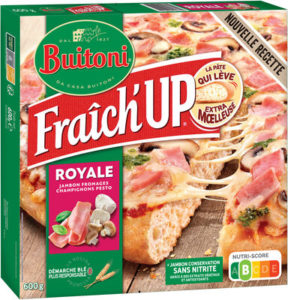
Fraich’UP frozen pizza and E. coli: French prosecutors this week searched a Buitoni Fraich’UP frozen pizza factory in northern France, the suspected source of an E. coli outbreak that has left dozens of children sick, as well as the headquarters of its owner Nestle France. Buitoni is owned by the Swiss food conglomerate Nestle,

An investigation into involuntary manslaughter and deceitful practices was opened on 1 April after authorities learned of more than 70 infections, which may have caused the deaths of a one-year-old and an 18-year-old.

The inspections “revealed a deterioration of food hygiene controls”, the presence of “rodents” and insufficient measures to prevent pests from contaminating a food production site.

Kinder chocolate and Salmonella: European health agencies have called for further investigation into the Kinder chocolate factory in Arlon linked to an outbreak of Salmonella across Europe.
Kinder, owned by the Italian company Ferrero, detected Salmonella Typhimurium in a buttermilk tank at the Arlon site during the manufacturer’s own checks in December 2021, according to the ECDC. The Belgian foods safety agency FASFC said in a statement at the time: “After investigations (…) and following the findings of the last few hours that the information provided by Ferrero is incomplete, the Agency is today withdrawing the authorization of the Ferrero production plant in Arlon”.

As of April 8, there have been at least 150 cases of confirmed or suspected salmonella linked to the Kinder products, in Belgium, France, Germany, Ireland, Luxembourg, the Netherlands, Norway, Spain, Sweden and the UK.

I could not have said it better.  Here is the full post from the amazing and insightful Phylliis Entis who posts the best at eFoodAlert.
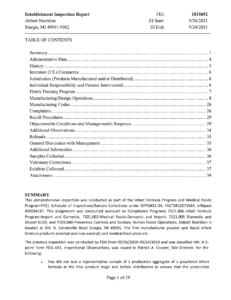
Between September 1, 2019 and September 20, 2021, Abbott Nutrition received seventeen consumer complaints regarding multiple Similac powdered formula products.

Fifteen of the complaints related to infants testing positive for Salmonella after consuming a Similac product. One complaint cited an infant who was diagnozed with Cronobacter (Enterobacter) sakazakii, and one was as the result of an infant death from an unspecified cause.

This information is contained in the September 20-24, 2021, Establishment Inspection Report (EIR), obtained by eFoodAlert from the US Food and Drug Administration (FDA) in response to a Freedom of Information Act request. APPLIED – FOI II – BR Abbott Nutritions- FEI# 1815692 9-2021 EIR.

How the complaints were handled

In response to the Cronobacter complaint, the company reviewed its batch records and its finished product microbiological testing records. The complaint was reviewed by an internal Abbott Nutrition Medical Team.

The firm closed the complaint after determining that all batch records were acceptable, that there were no other consumer complaints, and that microbiological testing was negative for C. sakazakii.

The infant death complaint triggered a batch record review for three lots of Similac Alimentum. After completing the review and determining that no other complaints or medical concerns had been identified for the products, the company closed the complaint.

The fifteen Salmonella complaints involved infants who had been fed one or more batches of Similac Alimentum, Similac ProAdvance, Similac Spit-Up, Similac Total Comfort, Similac Advance, Similac Pro Sensitive or Elecare for Infants.

All fifteen of the infants tested positive for Salmonella.

Once again, the batch record reviews came back acceptable, and finished product testing results were negative for Salmonella.

A finished product sample of one of the implicated batches (Similac Advance lot #472005) was obtained by Abbott Nutrition from the consumer. The sample was subjected to a visual exam, and the container was examined in the packaging lab.

The company did not conduct any microbiological tests on this sample.

Abbott Nutrition’s ‘Standard Operating Procedure for Handling Complaints’ specifies that “…any chemical or microbial testing of an unopened customer sample requires the approval of the AN Vice President Quality or delegate.”

The EIR does not state whether approval was sought to carry out microbiological tests on the sample.

Abbott’s internal test results raise concerns

In addition to the consumer complaints, the EIR also reveals that the company had found Cronobacter in two batches of finished product.

The first of these positive results was recorded for Similac Alimentum (Batch 697464), produced on September 25, 2019, just one day after the completion of the FDA’s September 2019 inspection of Abbott’s production facility.

The root cause of the contamination was determined to be environmental. The company implemented correction actions and destroyed the contaminated batch.

The specific root cause for the second positive result, this time in Similac Spit-Up (Batch 732675), produced on June 22, 2020, was never found, according to the EIR. Several deficiencies were noted during the root cause investigation, corrective actions were implemented, and the batch was destroyed.

In addition to the two instances of Cronobacter in finished products, Abbott also found Cronobacter in five environmental samples between January 2019 and August 2021. There were no Salmonella-positive environmental samples.

All of the Cronobacter-positive results were from non-product contact surfaces.

In its February 17, 2022 recall notice, Abbott acknowledged “…evidence of Cronobacter sakazakii in the plant in non-product contact areas.”

Yet the FDA investigation recovered Cronobacter sakazakii from at least one swab of what appears to be a contact surface, as described in the 1/31/2022-3/18/2022 Inspectional Observations report (FDA Form 483).

The explanation for the absence of Cronobacter-positive findings on product contact surfaces is revealed in the description of Abbott Nutrition’s environmental sampling procedures as reported in the September 2021 EIR.

According to the description of Abbott Nutrition’s environmental sampling program, the company conducts environmental sampling of product contact surfaces and non-product contact surfaces, as well as air, water, steam and compressed air.

Swab samples from product contact surfaces and non-product contact surfaces are tested for Enterobacteriaceae.

Enterobacteriaceae is a family of bacteria that includes both Salmonella and Cronobacter, and a test for total Enterobacteriaceae may be used as an indicator of general sanitary conditions in a production facility.

If a non-product contact surface produced a positive result in an area of the plant that was considered “high care” by the company, the isolates were analyzed for both Salmonella and Cronobacter.

On the other hand, if a product contact surface was positive for Enterobacteriaceae, the company did NOT test the isolates for Salmonella or Cronobacter, rationalizing that the finished product is analyzed for both microbes.

However, except in the event of massive contamination, Salmonella or Cronobactermost likely would be present at very low levels in the finished product, and the chances of detecting these contaminants would be akin to having the same number come up twice in a row on a roulette wheel.

By choosing not to test Enterobacteriaceae-positive product contact surfaces for Cronobacter or Salmonella, the company missed an opportunity to head off a serious problem.

FDA not blameless

There was a two year gap between inspections of Abbott Nutrition’s production plant in Sturgis, Michigan.

During this time, the United States–indeed, the entire world–was reeling from the Covid-19 pandemic.

When the FDA returned to Abbott, the company’s Covid-19 protection program required that the agency give advance notice of their planned inspection–something that had not been the case in the past.

Although the company had four days notice during which they could “tidy up” in anticipation of the FDA visit, the inspection team still found several issues of note, which were detailed in the Inspectional Observations form (FDA Form 483) provided to the company at the end of the inspection.

But one key observation was missing from the list.

There was no mention of the two finished product batches that had tested positive for Cronobacter sakazakii since the previous inspection, nor of the Cronobacter-positive environmental test results.

These observations were included instead on the Form 483 issued at the end of the January-March 2022 inspection.

According to the September 2021 EIR, the two-person FDA inspection team did not carry out any environmental sampling during the course of their visit, even after learning of the Cronobacter-positive results. Two finished product batches were sampled for nutrient analysis and two for microbiological analysis.

Unanswered questions

Seven months after FDA received the first report of an infant infected with Cronobacterand nearly four months after the agency initiated its in-depth inspection of Abbott Nutrition’s production facility, several questions remain:

In view of what the FDA learned in September 2021 regarding Cronobacter-positive environmental and finished product samples at the Abbott facility, why did it take more than four months for the agency to initiate another inspection after receiving the first of the illness reports?

Why did the FDA inspectors not respond more forcefully to those Cronobacter-positive results when writing up the list of Inspectional Observations at the completion of their September 2021 inspection?

Would Abbott have discovered and addressed its contamination problem sooner if it had tested product-contact surfaces for Cronobacter instead of relying upon finished product tests?

As Cronobacter (unlike Salmonella) is not a “reportable” disease in most states, how many additional cases of Cronobacter in infants have gone unreported?

Why did it take until February 17, 2022, before the public was made aware of the situation?

Learn more about Cronobacter sakazakii and other foodborne disease outbreaks in TAINTED. From Farm Gate to Dinner Plate, Fifty Years of Food Safety Failures, now available in digital, print and audiobook editions.

TAINTED formats 3

A few days ago Politico posted “The FDA’s Food Failure,” Clearly,. the FDA has much work to do.  However, the last years have brought a level of transparency to the FDA that it had not shown in the past – at least as it relates to the fact and the status of outbreak investigations.

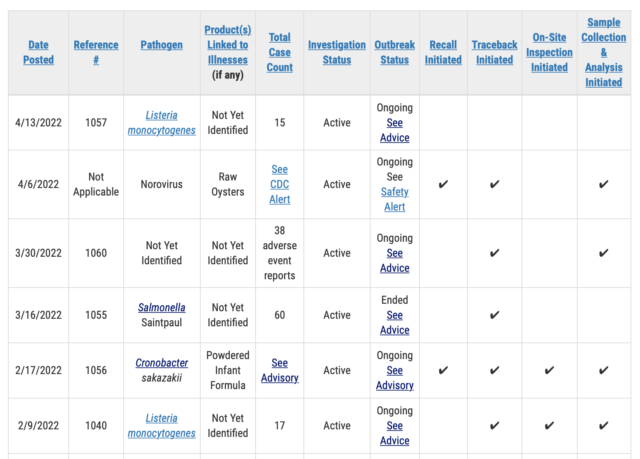
On it page “investigation of Foodborne Illness Outbreaks” we see the status of both the closed and active investigation, some solved and some not yet.

Here are the active investigations – Listeria – two of them, Norovirus, Salmonella, Cronobacter and one not yet identified.

I have a lot of food safety friends – some who will and will not admit it publicly.  Here is one of the best emails I received recently after Politico posted “The FDA’s Food Failure,” a 36-page investigation (Pulitzer Prize eligible) by Helena Bottemiller Evich that details the fact that food safety is not a high priority at the U.S. Food and Drug Administration (FDA).

Here is just a sampling of what this one, unnamed food safety advocate, suggests:

  • Swiftly finalize remaining FSMA rules, including the rules on traceability and ag water.
  • Strengthen proposed safety standards for agricultural water, including mandatory water testing requirements and a requirement to treat water that is high-risk before using it in growing.
  • Swiftly develop standards for toxic metals in baby foods that are based on risks to infants, not industry concerns about sourcing.
  • Reform the food additives approval process to ensure new food additives are given adequate safety review.
  • Move FDA funding from agriculture committee to health committee and enhance funding for CFSAN
  • Enhance agency the agency’s food operations by re-organizing and centralize and streamline the agency’s operations, with direct accountability to the Commissioner.
  • Investigate the agency’s inspection practices to identify why the agency failed to detect the issues that contributed to the recent outbreak of Cronobacter in infant formula.
  • Enhance the agency’s capacity to solve outbreaks and require recalls.
  • Issue 10 year sodium reduction targets and develop accountability for industry that fails to meet those targets
  • Design a clear, mandatory, front-of-package labeling system to identify foods that are high in unhealthy nutrients

A new emailed comment:

Good Morning Bill

Read with interest you proposed FDA Manifesto I agree with all.

Let me add some suggestions

  1. Develop a SINGLE Federal Food Agency that has a 100% focus on FOOD not drugs, medical devices and tobacco. In most developed countries Food is regulated by a single Agency. This is not a novel idea and has been proposed numerous times. No one has the Political will to move forward.
  2. Have adequate funds appropriated so that the regulatory agency can conduct all facility inspections at a minimum yearly. Inspectors should be adequately trained and supervised. The program should be supervised by an independent third party entity such as a Government- industry partnership\

Side bar suggestion

The Food Service industry is regulated by a diverse number od Agencies,State,County City and any on else who wants to be a player. Each with their interpretation of Food Safety mandates. It is strongly suggested that ALL jurisdictions  embrace the latest edition of the FDA Food Code Guidance

Bill just some random thoughts

First published in Insider.

Bill Marler is an attorney who specializes in food borne illness cases.

Most of the cases he’s worked on have involved either undercooked or prepackaged foods.

He’s learned to always order food cooked well done and to avoid salads to reduce his risk of food poisoning.

When it comes to eating carefully in restaurants, Bill Marler is something of an expert.

The attorney has spent nearly three decades representing people who have experienced food borne illnesses caused by E. coli, Salmonella, and Listeria, among other pathogens.

Marler told Insider that he’s observed some common trends in what kinds of foods make people sick. In general, he said eating at home is the best way to minimize your risk of consuming undercooked or contaminated food.

“A lot of it has to do with being able to control your own environment: washing fruits and vegetables thoroughly, cooking the ones that need to be cooked,” Marler said.

But even Marler still dines out on occasion, although he joked that he’s not the most popular dinner party guest.

Here are a few rules that he’s followed to avoid poisoning for his entire career to date:

Salads are a bacterial minefield

Marler said of all the outbreaks he’s litigated on in recent decades, an overwhelming majority of them have led back to foods that were technically prewashed.

Outbreaks of E. coli linked to romaine lettuce and listeria tied to bagged salads are among some of the more well-known recent outbreaks. But what consumers might not realize is that they could be served a prepackaged salad in a restaurant.

“Even in the best restaurants, it’s usually pretty packaged salads that they use,” Marler told Insider. “They may or may not cut them up themselves and wash them themselves.”

Rather than ask every restaurant staff about their food preparation, Marler said he plays it safe and orders cooked vegetables instead. If he wants a salad, he’ll eat at home.

Most cases he’s worked on are linked to undercooked meat

Most instances where people get sick from eating in restaurants end up leading back to raw or undercooked foods, Marler told Insider.

Raw meat may contain bacteria such as salmonella or campylobacter — the most common culprits of food poisoning. These bacteria are destroyed when meat is cooked thoroughly.

After hearing enough horror stories from clients who were served undercooked meat, the lawyer now takes a cautious approach: if he’s ordering meat, it has to be well done.

“Sometimes chefs look at me a little askance when I’m ordering a well-done steak, but it’s part of my process,” Marler said.

Foodborne illnesses linked to shellfish are on the rise

When asked if he ever orders raw seafoods like oysters or sashimi in restaurants, Marler answered with an emphatic “no.”

Oysters are high on Marler’s list of foods that routinely get linked to food poisoning outbreaks. He previously told Insider that he’s seen an uptick in foodborne illnesses linked to shellfish in the past decade, in part due to warming waters.

Consuming raw shellfish is especially risky because they’re not cooked to kill off harmful viruses and bacteria.

Since mid-January 2022, more than 400 people have fallen ill in Canada and the United States after consuming raw oysters contaminated with norovirus, a highly contagious virus that causes diarrhea and vomiting.