
Georgia Found Salmonella in Peanut Butter and Connecticut Too - which Lab was First Smack-down.

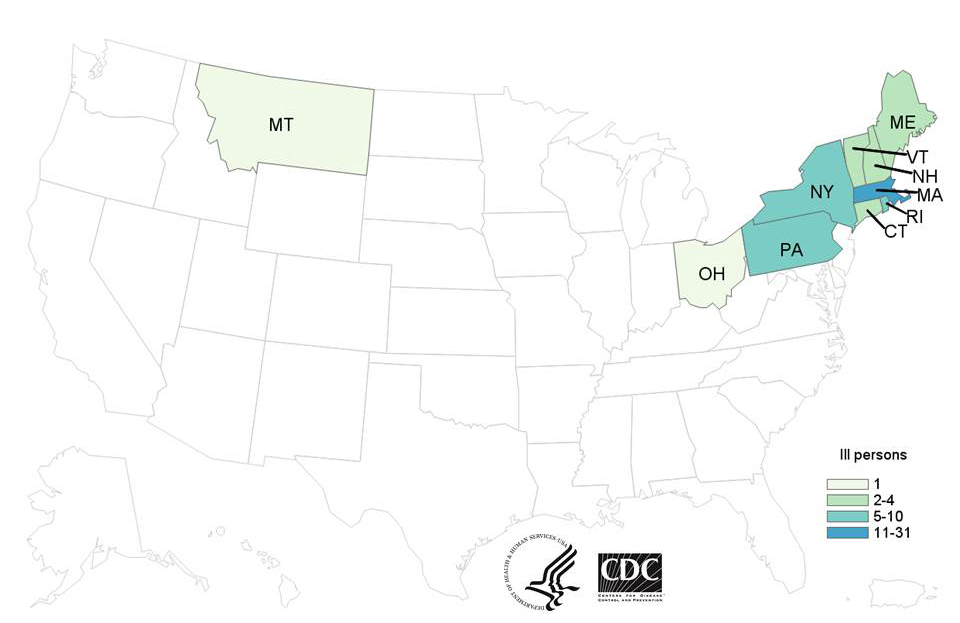
Efoodalert alerted me that food inspectors conducting recall effectiveness checks in the state of Connecticut in response to the nationwide Salmonella outbreak linked to King Nut peanut butter have confirmed the presence of Salmonella bacteria in an unopened five-pound tub of peanut butter found at a Connecticut food distributor, Consumer Protection Commissioner Jerry Farrell, Jr.

“This is the first unopened tub (Georgia may disagree) of King Nut peanut butter found in the country that is definitively identified as being tainted with salmonella,” Farrell said. “My office just received the results from the Connecticut Department of Public Health Laboratory confirming the presence of Salmonella Type B in an unopened tub. This provides further evidence that some lots of King Nut brand peanut butter delivered to food service accounts are responsible for a recent outbreak of salmonella infections in consumers.”

The product, bearing one of the lot numbers identified in the recall, (lot # 8234 with a production date of 8/21/2008) was found at City Line distributors of West Haven. It was the only tub of that recalled lot. However, agency inspectors have taken samples of the other King Nut peanut butter tubs for analysis.

E. coli Raw Milk Strikes Again - Report from Connecticut Department of Agriculture

On July 16th, 2008 the Connecticut Department of Agriculture began an investigation of a possible link between several reported illnesses and the consumption of Retail Raw Milk (unpasteurized milk).  Recently we concluded that investigation. The investigation was prompted when the Department was notified by Connecticut Department of Public Health (DPH) Epidemiologists of 2 reported illnesses in which both patients had consumed Retail Raw Milk from a dairy licensed to produce Retail Raw Milk and pasteurized milk and milk products. The patients were aged 2 and 7, one was on dialysis. After notifying the dairy of the investigation, the dairy voluntarily stopped sale of all milk. Soon after the initial 2 reported illnesses, DPH reported 2 additional cases linked to the dairy. By the time we concluded our investigation a total of 7 known individuals were sickened from consuming Retail Raw Milk and several were hospitalized. The Retail Raw Milk implicated in this incident was purchased from 2 separate national, natural food, chain store locations and directly from the farm. None of the reported illnesses were linked to pasteurized milk and milk products produced at this dairy.

The individuals sickened had acquired a condition known as Hemolytic Uremic Syndrome (HUS) and one case of Thrombotic Thrombocytopenic Purpura (TTP). HUS is a disorder that occurs when an infection in the digestive system produces toxic substances that destroy red blood cells. It often effects the kidneys. This disorder is most common in children. It often occurs after a gastrointestinal (enteric) infection, often caused by a type of Escherichia coli (E. coli) bacteria, O157:H7.  Unpasteurized (Raw) milk has been associated with several outbreaks of E. coli O157:H7 infections in the U.S. Other outbreaks of E. coli O157:H7 have been associated with undercooked or raw hamburger (ground beef), unpasteurized fruit juices, alfalfa sprouts, dry-cured salami, lettuce, game meats and from transmission from animals to humans from contact with infected animals. HUS also can be caused by other enteric infections, including Shigella and Salmonella, and some non-enteric infections. Patients with TTP have clinical and pathologic features similar to patients with HUS.

In addition to Department of Agriculture staff, the investigation involved the Connecticut Department of Public Health and local health departments. After extensive testing of milk, milk contact surfaces, water sources, the environment in and around the farm and processing plant and, analysis of feces from each milking aged animal, the department obtained a genetic fingerprint match between E. coli O157:H7 recovered from the feces of 1 cow and E. coli O157:H7 isolated from 3 patients.

Approximately 170 separate samples and specimens of milk, water, feces and swabs of milk contact surfaces were analyzed by the DPH Public Health Laboratory in a 3 week period. A review of scientific literature reveals that E. coli O157:H7 as well as other food borne pathogens most likely are introduced into milk by contamination from animals shedding the organism in their feces. Direct introduction of pathogens into the milk from the bloodstream is unlikely but can not be ruled out. The department has concluded that the most likely cause of this food borne illness outbreak was the consumption of Retail Raw Milk contaminated with E. coli O157:H7. While good sanitation and management practices can lower the incidence of pathogens in raw milk we believe and studies support the position that pasteurization is the only proven way to eliminate pathogens from raw milk.

The Connecticut Department of Public Health and the Food and Drug Administration, and other public health authorities such as the American Medical Association, the American Academy of Pediatrics, the National Conference on Interstate Milk Shipments, the National Association of State Departments of Agriculture, the Association of Food and Drug Officials, and National Association of State Public Health Veterinarians all oppose the consumption of unpasteurized milk because of the health risks.

Cyclospora blog is resource for victims of cyclosporiasis

Connecticut health officials issued a warning early this month after several cases of Cyclospora infection surfaced in New Haven County. At least eight people tested positive for Cyclospora, a parasite. Cyclosporiasis, the illness caused by ingestion of Cyclospora, causes severe diarrhea, bloating, stomach cramps, aches, and low-grade fever. The parasite often is found in contaminated produce.

Marler Clark, the Seattle law firm nationally recognized for its successful representation of victims of foodborne illness, sponsors a blog about Cyclospora and Cyclosporiasis (http://www.CyclosporaBlog.com). The site provides news about outbreaks and information on Cyclospora, as well as a list of resources for victims of Cyclospora infection.

"This site should prove to be very useful for people suffering from Cyclospora infections," said William Marler, managing partner of Marler Clark. "There is much to learn about this parasite, which is relatively unknown by the public."

Health officials continue to work to determine the source of the outbreak. A Cyclospora outbreak in Florida earlier this year was traced to contaminated basil.

See also www.salmonellablog.com and www.foodborneillness.com.